Heard Without Words: How Shimabara Teaches Americans to Finally Shut Up and Listen
There's a moment that almost every American traveler in Shimabara describes, usually somewhere around day two or three. You're sitting across from someone — a tea house host, an elderly fisherman, a pottery instructor — and the conversation has stopped. Not awkwardly. Not because someone ran out of things to say. It's stopped because nothing more needs to be said, and somehow, inexplicably, both of you are completely fine with that.
For most of us raised on the idea that silence means something went wrong, this is genuinely disorienting. And then, slowly, it becomes one of the best things that's ever happened to you.
The Word the Japanese Have That We Don't
There's a concept in Japanese aesthetics called ma — often translated as "negative space" or "pause" — but those English approximations don't quite land. Ma isn't just an absence. It's a presence in itself. It's the space between notes that gives music its shape. It's the gap in a conversation that carries as much weight as the words on either side of it.
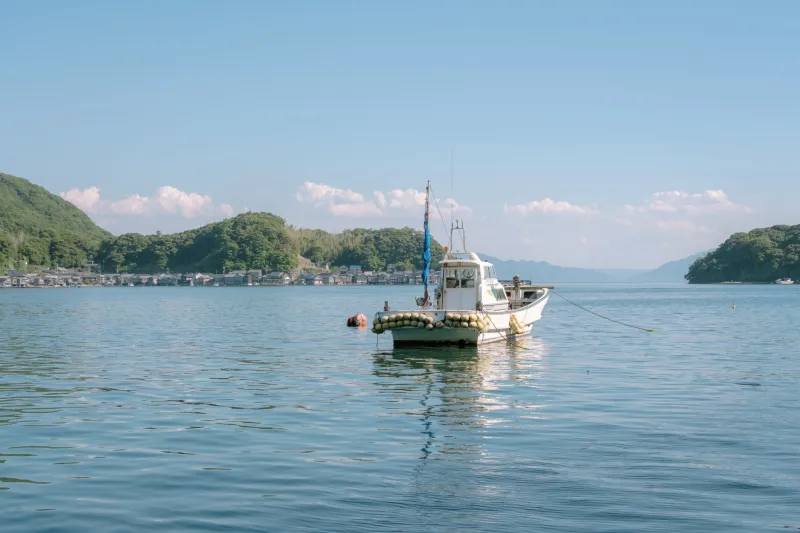
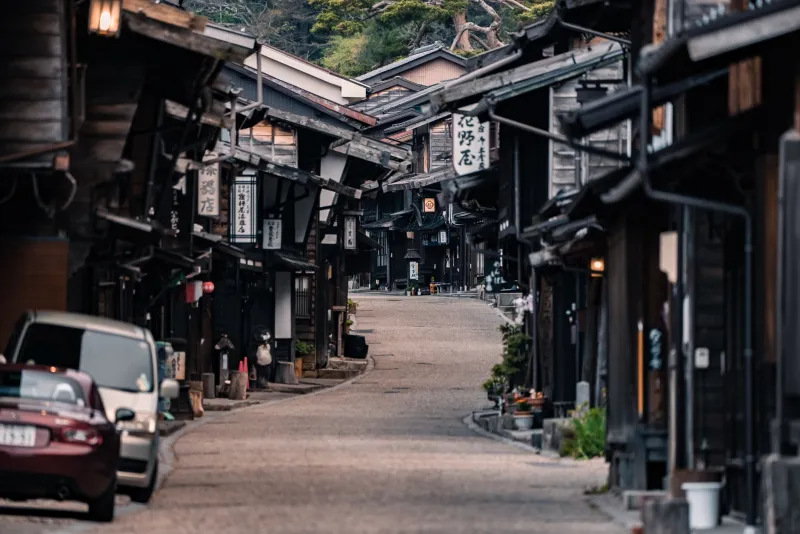
In cities like Tokyo or Osaka, ma gets crowded out by noise and pace. But in Shimabara — a peninsula that moves at its own unhurried rhythm, flanked by a volcano on one side and the sea on the other — ma is everywhere. It's in the way a shopkeeper wraps your purchase without a word, her hands moving with quiet ceremony. It's in the pause before a local pours your tea, the slight bow that says I see you more clearly than any sentence could.
For Americans conditioned to interpret silence as discomfort, this is a full-on recalibration.
What the Expats Will Tell You
Mark, a former marketing director from Portland who relocated to the Shimabara Peninsula three years ago, puts it plainly: "I used to think I was a good communicator. I talked for a living. Then I moved here and realized I was just... loud. Not mean, not rude — just loud in a way that was actually getting in the way of understanding people."
He describes his first real breakthrough as happening during a neighborhood meal — a casual gathering where he was the only non-Japanese speaker at the table. "Nobody was performing for me. Nobody was slowing down or switching to English. And instead of panicking, I just started watching. I noticed who laughed when. I noticed who served whom first. I noticed the way the oldest woman at the table never asked for anything but always had what she needed. I understood more about those people in two hours of silence than I had in months of Google Translate conversations."
That kind of observation — the deep, patient kind — is something Shimabara almost forces on you. The peninsula isn't set up to accommodate linguistic shortcuts. Outside the main tourist spots, English signage is sparse, translation apps hit their limits fast, and the locals, while warm, aren't necessarily going to bridge the gap for you. Which means the bridge-building falls to you. And it turns out the most reliable bridge is presence, not vocabulary.
Tea Ceremony as a Masterclass in Paying Attention
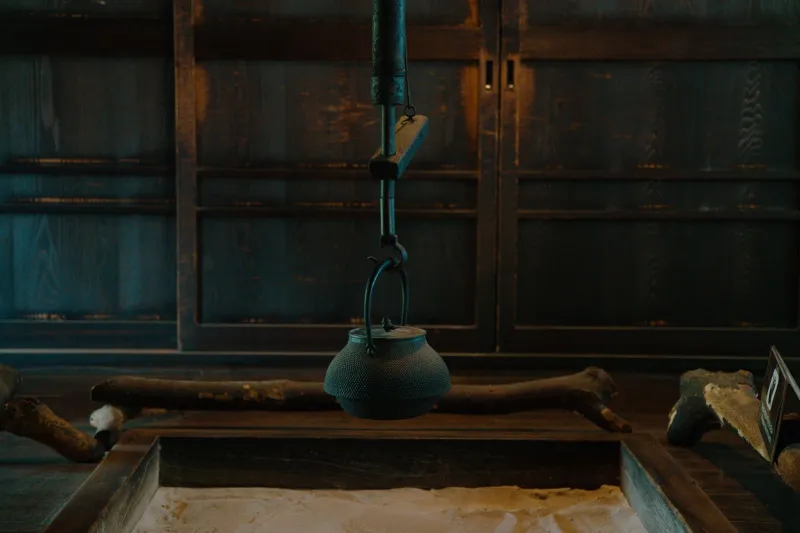
If there's one experience in Shimabara that crystallizes all of this, it's participating in a traditional tea ceremony. Several local practitioners offer sessions to visitors, and the experience is deliberately, almost stubbornly, non-verbal.
You watch. You follow. You mirror. You wait.
Sarah, a high school teacher from Atlanta who visited Shimabara on a solo trip last spring, described her tea ceremony session as "the most focused I'd been in years." She hadn't expected that. "I thought it would be a cultural check-the-box kind of thing. But the host communicated everything — when to sit, how to hold the bowl, when it was okay to drink — without a single verbal instruction. And I got it. Not because I'm fluent in Japanese. Because I was actually paying attention for once."
That's the quiet genius of ma in practice. When words aren't available, you stop waiting for them and start reading everything else: posture, eye contact, the angle of a hand, the rhythm of movement. You become, almost involuntarily, a better observer of human beings.
Meals That Don't Need a Menu Explanation
Food in Shimabara operates on a similar frequency. Sit down at a small local restaurant — the kind with a hand-written menu and a proprietor who's been making the same dishes for thirty years — and you're entering a space where the communication happens through the meal itself.
The way a bowl of guzoni (Shimabara's beloved New Year's soup, though locals eat it year-round) is placed in front of you, the quiet check-in glance from the cook to see if you're enjoying it, the slight nod that passes between you when you catch her eye and smile — it's a full conversation. No words required.
Travelers who lean into this rather than fighting it consistently report the same thing: they leave feeling more connected to the people they met in Shimabara than to people they've spoken with for hours in more language-accessible places. Connection, it turns out, doesn't run on words. It runs on attention.
The Listening Muscle You Forgot You Had
There's a practical takeaway buried in all of this that applies well beyond Japan. Americans — and this isn't a criticism, just a cultural observation — tend to equate communication with talking. We're trained from childhood that articulating yourself is the goal, that the person who frames the argument best wins, that silence is a gap to be filled.
Shimabara quietly dismantles that assumption. Not through lectures or workshops or anything as deliberate as a personal development retreat. Just through the steady, patient reality of a place where ma is respected, where presence matters more than performance, and where the people around you are communicating constantly — just not in the way you're used to receiving.
You leave Shimabara a slightly different listener. Slower to fill the gaps. More curious about what's happening in the space between sentences. More comfortable sitting with someone in shared quiet and recognizing that as something, not nothing.
Come Quiet, Leave Changed
Nobody sells Shimabara as a communications workshop. That's not what it is. It's a peninsula with a volcano, a castle, incredible seafood, and a history that would make your jaw drop. But woven through all of it is this undercurrent — this cultural fluency in silence — that has a way of getting under your skin.
If you come here expecting to talk your way through Japan, you'll find the experience a little frustrating. But if you come open to the idea that some of the most meaningful exchanges of your trip might happen without a single shared word, Shimabara will give you more than you came for.
Bring your curiosity. Leave some of your words at home. The silence here has a lot to say.