Your Internal Clock Breaks in Shimabara — And That's the Best Thing That Can Happen to You
Somewhere around the second morning in Shimabara, something shifts.
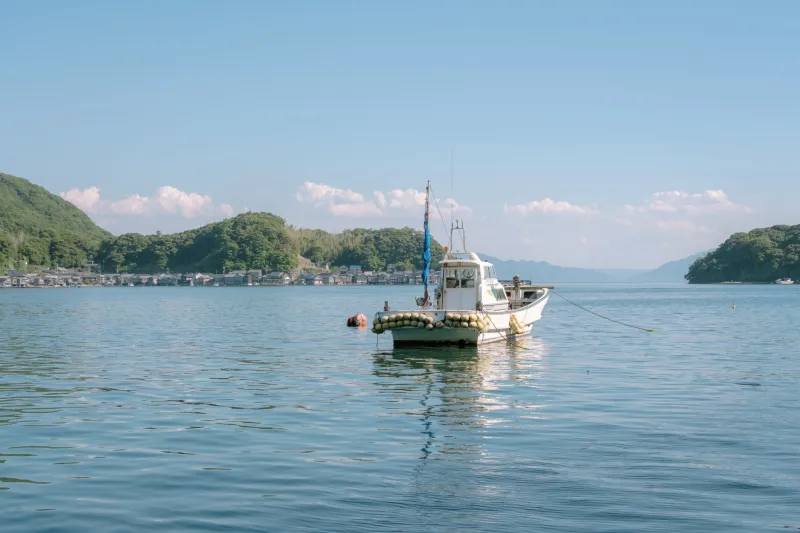
You wake up without an alarm. You don't immediately reach for your phone. You notice the light coming through the window — the particular gray-gold quality of early morning on the Ariake Sea — and instead of calculating how many hours of sleep you got or mentally drafting your to-do list, you just... watch it. For maybe ten minutes. Without guilt.
If you've spent any significant time in the United States, that experience probably sounds either deeply appealing or mildly terrifying. Possibly both.
Visitors to the Shimabara Peninsula have been describing this sensation for years, usually in slightly baffled terms. "I kept waiting to feel anxious," said Dana Whitfield, a project manager from Austin who spent a week on the peninsula last spring. "Back home, doing nothing for ten minutes feels like a personal failure. Here, I genuinely forgot to care."
So what's actually happening? And why does it take almost exactly 48 hours?
The Tyranny of the American Clock
Before we get to Shimabara, it helps to understand just how aggressively time-obsessed American culture has become. Behavioral psychologists have long noted that the US operates under what researchers sometimes call "time urgency" — a chronic, low-grade anxiety tied to the belief that time is a finite resource being perpetually wasted. We schedule in 15-minute blocks. We feel guilty about leisure. We check the time an average of 80 to 150 times per day, according to some estimates.
Dr. Priya Nair, a cognitive neuroscientist who studies temporal perception, explains it this way: "The brain doesn't have a built-in clock. It constructs a sense of time from external cues — notifications, deadlines, social schedules, commercial stimulation. When those cues are dense and frequent, the brain interprets time as scarce. Remove them, and the whole system recalibrates."
That recalibration, she says, typically takes between 36 and 72 hours. Which maps almost perfectly onto what Shimabara visitors keep reporting.
What Shimabara Is — and Isn't
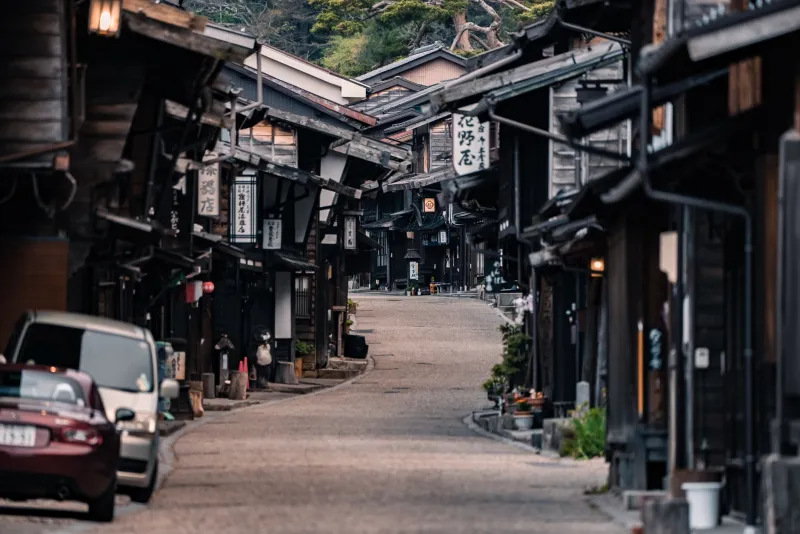
The Shimabara Peninsula sits in Nagasaki Prefecture in western Kyushu, jutting into the Ariake Sea like a quiet afterthought. Mount Unzen dominates its center — a volcanic massif that last erupted dramatically in the early 1990s and still breathes sulfurous steam into the sky. The castle town of Shimabara anchors the eastern coast, its white-walled samurai district and spring-fed water channels moving at a pace that feels borrowed from another century.
What the peninsula conspicuously lacks is the commercial architecture of urgency. There are no massive shopping malls with piped-in music designed to accelerate purchasing decisions. No billboard corridors. No drive-through everything. The convenience stores exist, sure, but they're quiet. The streets are quiet. Even the ferry terminal, where boats cross to Kumamoto, operates with a calm efficiency that somehow doesn't feel rushed.
"It's not that nothing happens here," said Marcus Lee, a UX designer from Seattle who started visiting Shimabara annually three years ago. "It's that nothing is demanding anything from you. There's no ambient pressure. And that's so rare that your nervous system doesn't know what to do with it at first."
At first. After about 48 hours, it figures it out.
The Neuroscience of Slowing Down
Here's what's likely happening in your brain during those first two days.
The default mode network — the neural system associated with self-referential thinking, planning, and rumination — is chronically overactivated in high-stimulation environments. It's the part of your brain that rehearses tomorrow's meeting while you're trying to eat dinner. In environments with constant external demands, it rarely gets a genuine rest.
Low-stimulation environments, particularly those with natural elements like water, forests, and open sky, have been shown in multiple studies to reduce default mode network activity and shift the brain toward what researchers call "soft fascination" — a relaxed, effortless attention that restores cognitive resources rather than depleting them.
Shimabara delivers soft fascination in quantity. The sound of water running through the machiya district's stone channels. The view of Unzen's ridgeline from almost any point on the eastern coast. The deliberate pace of a traditional ryokan breakfast, where each dish arrives in sequence and nobody is hovering to turn the table.
"After about two full days," Dr. Nair notes, "the brain stops waiting for the next stimulus. It stops treating silence as a gap to be filled. That's when time perception fundamentally changes — it feels longer, richer, more textured. An hour stops feeling like something to survive and starts feeling like something you actually inhabit."
Visitors Put It in Their Own Words
The testimonials from Americans who've experienced this shift tend to cluster around a few recurring themes: surprise, slight disorientation, and then something that most of them struggle to name precisely.
"I kept thinking I should be doing something," said Theresa Kowalski, a nurse from Chicago who visited Shimabara as part of a broader Japan trip. "And then at some point that thought just stopped coming. I was sitting by the water near the castle and I realized I had no idea what time it was and I didn't want to know. That's never happened to me in my adult life."
Jordan Reyes, a financial analyst from New York, described it more analytically: "It's like the peninsula runs on a different operating system. Back home, I'm always multitasking even when I'm supposedly relaxing. Here, I was doing one thing at a time. Just one. And it felt almost transgressive at first."
The 48-hour threshold keeps coming up. Visitors who stay only a night often report enjoying Shimabara but not quite crossing into that altered state. Two nights seems to be the minimum for the deeper shift. Three or more, and people start describing changes that persist after they leave.
What You Bring Home
The interesting question isn't just what happens in Shimabara — it's whether any of it sticks.
Anecdotally, many visitors report a lingering effect. Not a permanent transformation, but a recalibrated baseline. A slightly higher tolerance for stillness. A reduced compulsion to fill every quiet moment with content. A memory of what it felt like to exist in time rather than race against it.
"I still check my phone too much," Marcus Lee admitted, laughing. "But I notice it now in a way I didn't before. Shimabara gave me a reference point. I know what the other thing feels like, so I can at least recognize when I've drifted."
That might be the most honest thing anyone can say about what Shimabara offers. Not a cure. Not a permanent escape. Just a reset — a genuine, neurologically grounded recalibration of your relationship with time, delivered by a peninsula that has never been in much of a hurry and doesn't intend to start.
Your watch still works when you get back. You just won't trust it quite as much.