Why the Scenes You Almost Missed in Shimabara Are the Ones You'll Never Stop Seeing

There's a specific kind of travel disappointment that hits somewhere over the Pacific on the flight home. You scroll through your camera roll — thousands of photos — and realize that the images you thought would define the trip aren't doing much for you anymore. The famous shrine looked exactly like the postcard. The neon district was exactly as advertised. You were there. You documented it. And somehow, it's already fading.
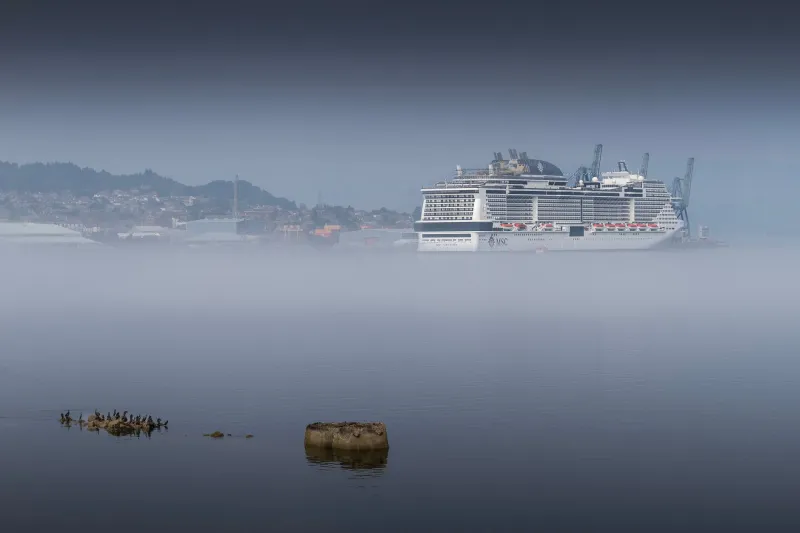
But then there's the other thing. The one you almost didn't photograph because it seemed too small, too ordinary. A weathered fishing boat rocking at the edge of a gray morning. A narrow street still wet from overnight rain, reflecting a single lantern. A crumbling stone wall along a hillside path that nobody else was walking.
For a lot of Americans who've spent time in Shimabara, those are the images that refuse to leave.
The Paradox Nobody Warns You About
Shimabara sits on a peninsula in Nagasaki Prefecture, in the southwestern corner of Kyushu — Japan's southernmost main island. It's not a place that makes the highlight reels. It doesn't have a famous skyline. Its volcano, Mount Unzen, is impressive in a geological sense but doesn't exactly inspire the kind of awe-struck Instagram moment that drives most travel decisions.
And yet, ask anyone who's spent a few days here, and you'll hear a version of the same thing: I keep thinking about it. I don't totally know why.
That's the Shimabara paradox. The place is, by conventional tourism metrics, modest. Understated. Easy to overlook. And it burrows into your memory more stubbornly than destinations that tried ten times as hard to impress you.
The question worth asking is: why?
Your Brain on Subtlety
Psychologists who study memory and aesthetic experience have a name for what happens when a scene is just complex enough to hold your attention without overwhelming it. They call it "optimal stimulation" — the sweet spot where your brain is engaged but not flooded.
Japan's big-ticket attractions are, almost by design, maximally stimulating. Shibuya crossing. Fushimi Inari at peak season. The deer of Nara swarming tourists for crackers. These are powerful experiences, but they're also sensory events — your brain processes them quickly, categorizes them, and files them. Big. Busy. Japan. Done.
Shimabara doesn't do that. A quiet hillside temple with moss on its steps and no one else around gives your brain nothing to categorize quickly. It sits there, unresolved, slightly ambiguous. You're not sure what you felt. You're not sure what it meant. And because you never fully processed it, it never fully leaves.
There's also something to be said for the role of contrast. Most American visitors arrive in Japan through Tokyo or Osaka — environments of near-constant visual noise. By the time they reach Shimabara, their nervous systems are primed to notice absence. The quiet isn't just quiet; it registers as profound. The empty street isn't just empty; it feels like a held breath.
What Shimabara Actually Looks Like (And Why It Works)
Let's be specific, because the details matter here.
The coastline along the eastern side of the peninsula is not dramatic. It's not the rugged, cinematic coastline of Big Sur or the Amalfi Coast. It's gentle and a little gray, with small harbors where boats sit low in the water and fishermen do their work without any awareness that a visitor might find it picturesque. That obliviousness is, paradoxically, what makes it so.
The old samurai district in Shimabara City — where clear spring water runs through open channels alongside the road — is the kind of thing that takes a moment to even register as remarkable. You're walking, you notice water, you look closer, and you realize the entire street has this quiet, living current running through it. There's no sign telling you to be amazed. No crowd confirming that amazement is the appropriate response. It's just there, doing its thing, and you're left to figure out what you feel about it on your own.
The ruins of Shimabara Castle, the farmhouses on the slopes of Unzen, the graveyards with stones worn smooth by decades of rain — none of these are "attractions" in the way Americans typically use that word. They're more like evidence. Evidence that a lot of time has passed, that a lot of people lived here, and that most of them didn't particularly care whether anyone was watching.
The Mundane Moment Problem
Here's something that comes up a lot when you talk to Americans who've visited: the moments they remember most vividly are often embarrassingly ordinary.
A bowl of champon noodles eaten alone at a counter while rain hit the window. The sound of a temple bell at six in the morning when they couldn't sleep. A cat sitting in a doorway on a street they wandered down by accident.
These moments don't make good stories at dinner parties. They're hard to explain. I was just sitting there, and it was raining, and I felt... — and then what? There's no satisfying conclusion. The moment didn't resolve into anything. It just was.
And maybe that's exactly the point. We live in a culture that is aggressively narrative. Everything has to build toward something, mean something, be shareable. Shimabara keeps handing you experiences that resist that structure. They're complete in themselves, without needing to go anywhere. For Americans who are used to experiences that are pre-packaged with meaning, this can feel disorienting at first — and then, quietly, like relief.
Why the Forgettable Sticks
There's a concept in Japanese aesthetics called mono no aware — often translated as "the pathos of things" or a gentle sadness at the transience of life. It's the feeling you get watching cherry blossoms fall, knowing they're already gone. It's bittersweet, tender, and entirely at peace with impermanence.
Shimabara doesn't perform mono no aware. It just lives it. The peninsula has a genuinely layered history — volcanic disasters, a bloody 17th-century rebellion, the slow rhythms of agricultural and fishing life — and all of that sits in the landscape without being announced. You can feel the weight of it without being told it's there.
That weight is, in the end, what makes the views unforgettable. Not because they're beautiful in a conventional sense. But because they carry something. They ask something of you — a kind of attention that most of us have been trained out of. And when you finally give it, even briefly, something happens that a packed itinerary through Japan's greatest hits rarely produces.
You actually see where you are.
Shimabara won't compete for your attention. It won't put itself on a poster or run a campaign. It'll just sit there, quiet and a little weathered, doing what it's always done — and wait to see if you're paying close enough attention to notice what you're looking at.
Most people aren't. But the ones who are? They're still thinking about it.