You Packed Your Bag Last Night. You're Still Not Gone.
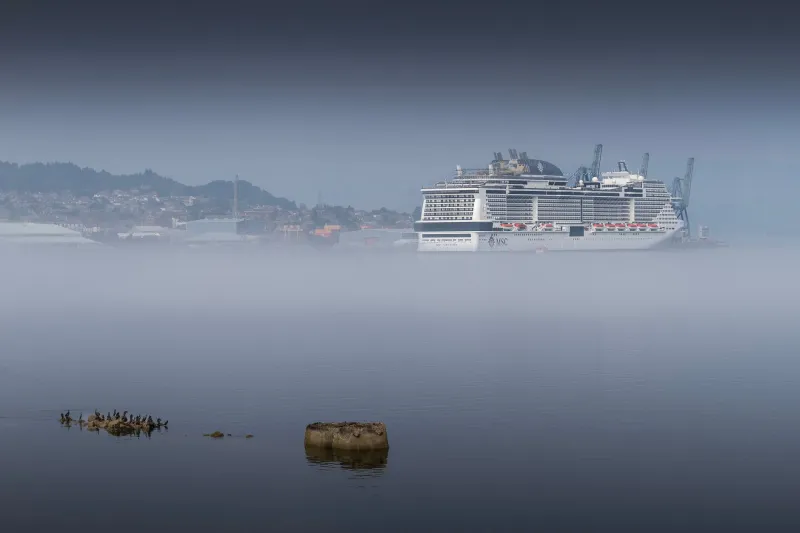
You set the alarm. You confirmed the ferry. You even laid out your clothes the night before, the way you do when you're serious about catching an early train. And then morning came, and you found yourself sitting on the edge of the ryokan futon, staring at the fog curling off the bay, thinking: What's one more hour?
This is not a you problem. This is a Shimabara problem. And if you've been here, you already know exactly what we're talking about.
The Clock Does Something Weird Here
There's a reason Shimabara doesn't show up on most American itineraries. It's not flashy. It doesn't have a neon district or a conveyor belt sushi joint with a line out the door. What it has is something harder to package: a pace that quietly dismantles your relationship with time.
Back home, time is a resource you manage. You schedule it, protect it, and feel guilty when you waste it. In Shimabara, time becomes something else entirely — more like weather than currency. You stop managing it. You start moving with it.
Psychologists call this kind of shift a disruption to your "temporal schema" — the mental framework you use to organize your sense of past, present, and future. High-stimulation environments (think: Times Square, Tokyo Station, your open-plan office) constantly reinforce that schema by bombarding you with cues. But in a place like Shimabara, where the loudest thing on a Tuesday morning might be a heron landing near the samurai district's stone walls, those cues disappear. And when they do, your internal clock starts drifting.
The result? Days feel longer in the best possible way, and yet somehow the whole trip feels like it lasted twenty minutes.
"I Thought I Was Ready to Go"
Ask anyone who's spent time on the Shimabara Peninsula about their departure, and you'll hear a version of the same story.
Karen, a teacher from Portland who spent five days in Shimabara last spring, described standing at the ferry terminal with her rolling suitcase and a one-way ticket back to Kumamoto — and genuinely not being able to identify why she felt so reluctant. "I wasn't sad, exactly," she said. "It was more like I wasn't finished. Like I'd been in the middle of a sentence and someone closed the book."
That incomplete feeling is almost universal among visitors. And it's not just poetic language. It reflects something real about how the brain processes experiences that unfold slowly. Research on memory formation suggests that we encode "slow" experiences differently than fast ones — they tend to feel richer, more textured, and paradoxically shorter when we look back on them. Shimabara hands you five days that feel like ten while you're living them, then compress into something that feels like a long, vivid afternoon once you're on the plane home.
No wonder leaving feels wrong.
The Peninsula Doesn't Rush You Out
Part of what makes departure so psychologically complicated is that Shimabara itself offers no signal that it's time to go. There's no checkout pressure, no aggressive souvenir hawking near the exits, no sense that the place has anywhere else to be.
The shotengai — the covered shopping street that threads through the old town — hums at the same unhurried frequency at 9 a.m. as it does at 3 p.m. The onsen baths don't care what time your ferry leaves. Even the vendors selling Shimabara's famous guzoni stew seem perfectly content to let you stand there, slurping slowly, watching the street.
This absence of urgency is unusual enough that American visitors frequently comment on it. We're wired for the nudge — the "last call," the hotel checkout reminder, the taxi driver who honks twice. Shimabara doesn't do that. It just keeps being itself, quietly and completely, right up until the moment you physically leave it.
And that's exactly what makes leaving feel like an interruption rather than a conclusion.
Why Even a Long Stay Feels Too Short
Here's the paradox in full: people who stay three nights wish they'd stayed five. People who stay five nights wish they'd stayed a week. People who stay a week start quietly researching whether they could work remotely from a guesthouse near Unzen.
This isn't restlessness. It's the opposite. It's a kind of satisfied hunger — the feeling of having found something genuinely nourishing and not wanting to stop eating.
The Shimabara Peninsula is layered in ways that reveal themselves slowly. The volcanic landscape around Mount Unzen looks completely different at dawn than it does at midday. The history embedded in the castle grounds and the Shimabara Rebellion memorial sites opens up gradually, as you piece together the stories through context and conversation rather than a rushed audio tour. The food — built from mineral-rich spring water, fresh seafood from the Ariake Sea, and produce grown in volcanic soil — rewards repeated meals, not single bites.
You can't consume Shimabara quickly. And the more you accept that, the more you realize that your original itinerary was optimistic at best.
What to Do With the Feeling
If you're reading this before your trip: build in buffer. Seriously. Whatever you planned, add a day. Not because you'll necessarily fill it with activities, but because you'll want the space to not fill it with anything — and to leave on your own terms rather than the ferry schedule's.
If you're reading this after your trip, sitting at a gate in Fukuoka or Nagasaki airport with that specific hollow feeling in your chest: you're not alone. That feeling has a name in Japanese culture — mono no aware — a gentle sadness at the passing of things, tinged with appreciation for their beauty. Shimabara has a way of making that feeling vivid.
And if you're reading this because you're still in Shimabara, bag packed, alarm ignored, watching the morning fog do its thing over the bay — well. The ferry runs tomorrow too.
Yokabai. It's fine here. Stay a little longer.


