Quiet by Force: What Three Days Without Your Phone in Shimabara Actually Does to Your Brain
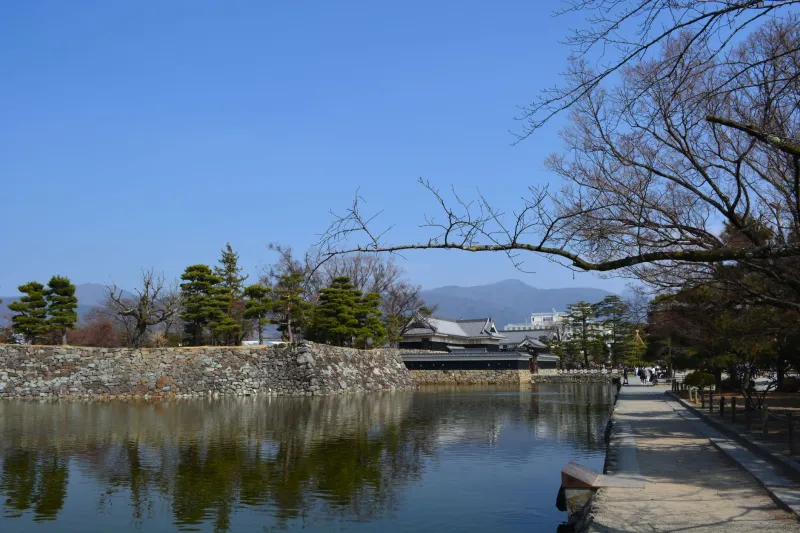
Kyle Brennan, a 34-year-old UX designer from Austin, Texas, describes the first afternoon like this: "I kept reaching for my phone to take a photo of the castle wall, and then I'd remember I'd left it at the guesthouse. And then I just... stood there. Looking at the wall. For like four minutes. I didn't know what to do with my hands."
He laughs about it now. But in that moment, standing in front of Shimabara Castle with nothing to document the experience for, something unexpected happened. He noticed the moss on the stone. The way a crow landed on the tower's edge and tipped its head. The faint smell of sulfur drifting down from Mount Unzen somewhere behind the treeline.
"I haven't actually seen a place like that in years," he said. "Not without a screen between me and it."
Kyle is one of a quietly growing number of Americans making their way to the Shimabara Peninsula — not for the Instagram content, not for a packed itinerary of must-sees, but specifically because there isn't much of either. Shimabara, tucked into the western edge of Nagasaki Prefecture on Kyushu's rugged coastline, has never been on the tourist circuit in any serious way. And for people arriving with the explicit goal of disconnecting, that absence is the whole point.
The Science of Doing Nothing (And Why It's So Hard)
Here's something researchers have known for a while that most of us actively ignore: boredom is good for you. Not the anxious, fidgety kind that sends you spiraling through TikTok at 11 p.m. — the real kind. The slow, uncomfortable stretch of time where your brain has nothing to process and starts, almost involuntarily, to wander.
Neuroscientists call it the default mode network — the brain state that activates when you're not focused on a task. It's associated with creativity, emotional processing, memory consolidation, and the kind of loose, associative thinking that produces actual insight. The problem is that smartphones have essentially declared war on it. Every notification, every refresh, every compulsive check of the weather app — each one yanks the brain back into task mode before the default network ever gets a foothold.
Shimabara, almost accidentally, removes those interruptions. Cell coverage is patchy in the peninsula's interior. Cafés don't advertise Wi-Fi passwords. The ferry crossing from Kumamoto — one of the most common ways to arrive — puts you on the water for an hour with nothing but the Ariake Sea and whatever's going on in your own head. By the time most visitors reach their ryokan or guesthouse, the detox has already started, whether they planned it or not.
The First 24 Hours Are the Worst
Everyone who's done this says roughly the same thing about day one: it's uncomfortable in a way that's hard to explain to people who haven't tried it.
Megan Torres, a marketing manager from Chicago who spent four days in Shimabara last spring, put it plainly: "I felt like I was forgetting something the entire first day. Like I'd left the stove on. That low-grade anxiety you carry around — I didn't realize how constant it was until I was somewhere that couldn't feed it."
She'd made a deliberate choice to leave her phone at home — not in her bag, not on airplane mode, but physically at her apartment in Chicago. "I knew myself well enough to know that 'airplane mode' wasn't going to cut it."
What she found on the other side of that anxiety was something she hadn't expected: time. Real, elastic, unhurried time. She wandered the old samurai district of Teppo-machi without a map app telling her how long the walk would take. She sat by the water at Shimabara Port and watched the fishing boats for an hour without once thinking about email. She got lost on a back road near Unzen and, instead of panicking, just kept walking until something interesting appeared — which, eventually, it did: a small shrine half-hidden by bamboo that she never would have found if an algorithm had been steering her.
"I cried a little, actually," she said. "Not because of the shrine. Just because I realized how long it had been since I'd found something by accident."
What the Locals Already Know
Ask anyone who actually lives on the Shimabara Peninsula about the pace of life, and you'll get a version of the same answer: it's just how things are here. There's no self-congratulatory slowness, no wellness branding around it. People fish, farm, run small restaurants, tend to their gardens. The morning vegetable market in the city center wraps up before most tourists have had breakfast. Hot spring water runs freely from public taps throughout town — part of Shimabara's famous shimizu spring water culture — and locals stop to fill bottles on their way to work like it's the most ordinary thing in the world.
Takeshi Yamamoto, who runs a small guesthouse near the castle, has watched the slow trickle of international visitors with quiet interest. "The ones who come here without a plan seem happiest," he said through an interpreter. "The ones with a full schedule — they're always rushing. There's not that much to rush to here. That's the gift, if you let it be."
He's noticed more Americans in the last couple of years, often arriving with the slightly dazed look of people who've recently landed from a very long flight and a very overscheduled life. "They slow down by the second day," he said. "Usually by the third day, they don't want to leave."
Reverse FOMO Is Real — And It's Liberating
One of the stranger psychological phenomena visitors report is what you might call reverse FOMO. The fear of missing out, as any millennial or Gen Z American knows, is the low-level dread that somewhere, someone is having a better time than you, doing something more interesting, eating something more photogenic. Social media is essentially a FOMO delivery system.
But in Shimabara, with no feed to scroll and no one to perform an experience for, something flips. You stop worrying about what you're missing and start noticing what's actually in front of you. The afternoon light on the castle moat. The way the volcanic steam rises from the hillside above Unzen in the early morning. The specific quiet of a town that goes to bed early and means it.
Kyle, the designer from Austin, described it as "JOMO" — the joy of missing out. "I wasn't missing anything. I was the only one there. And that felt incredible."
How to Do It Right
If you want to replicate this experience, a few practical notes from people who've done it:
Leave the phone behind — or at least in the room. Airplane mode is a half-measure. Physical distance works better for most people.
Take the ferry from Kumamoto if you can. The crossing is a built-in transition ritual. By the time you dock in Shimabara, you've already started decompressing.
Don't plan too much. The magic here happens in the unscheduled hours. Leave at least one full day with no agenda.
Bring a paper notebook. Sounds retro. Works incredibly well. When your brain starts generating thoughts that aren't in response to a notification, you'll want somewhere to put them.
Give it 48 hours before you judge it. The first day is withdrawal. The second day is adjustment. The third day is when people start saying things like "I don't want to go home."
Shimabara isn't trying to be a wellness destination. It's not marketing itself as a digital detox retreat or charging a premium for silence. It's just a place where the ferry comes twice a day, the spring water flows from the ground, and the volcano sits at the edge of town reminding you, quietly, that some things have been here a lot longer than your inbox.
Your notifications will be there when you get back. The moss on the castle wall won't wait.