Eat Like the Volcano Cooked It: Five Shimabara Dishes That Belong to Nowhere Else
Food tourism has a problem. It keeps sending people to the same cities, the same neighborhoods, the same Instagram-famous spots — and calling it discovery. Tokyo's ramen. Osaka's takoyaki. Kyoto's kaiseki. These are genuinely great. They're also deeply familiar, at least to anyone who's spent more than fifteen minutes on a food blog.
Shimabara doesn't operate on that frequency.
The peninsula sits at the intersection of a volcanic mountain range, a mineral-rich bay, and a farming tradition that developed in relative isolation for generations. The result is a culinary identity that even most Japanese travelers haven't encountered — one that's more elemental, more specific to its land, and frankly more surprising than anything you'll find on a Kyoto tasting menu.
Here are five dishes that make the case.
1. Guzoni: The New Year Soup That Shimabara Made Its Own
Guzoni is technically a national dish — a mochi soup eaten across Japan on New Year's Day. But Shimabara's version is something else entirely. Where Tokyo's zoni tends toward a clear broth with restrained toppings, Shimabara's guzoni is a deeply savory, almost aggressively generous bowl: large round mochi, clams pulled from Ariake Bay, and a broth built on local dried fish that carries a mineral depth you won't find in any other regional interpretation.
The clams are the key. Ariake Bay's unique tidal ecosystem produces shellfish with a flavor profile that chefs in other parts of Japan simply can't access. When that brininess hits the umami of the dried fish stock, you get something that tastes less like a recipe and more like a place.
Food tourism gets this wrong by treating guzoni as a cultural checkbox. Shimabara's version demands to be understood as a completely distinct dish that shares only a name with its national cousin.
2. Rokusuke-don: The Rice Bowl Built on Volcanic Spring Water
Shimabara sits atop an aquifer fed by Mount Unzen, and the spring water that bubbles up throughout the city is unusually soft — low in minerals, almost silky in texture. Local cooks have known for centuries that this water changes the way rice behaves. It cooks more evenly, absorbs flavor differently, and produces a texture that's noticeably distinct from rice prepared with harder water.
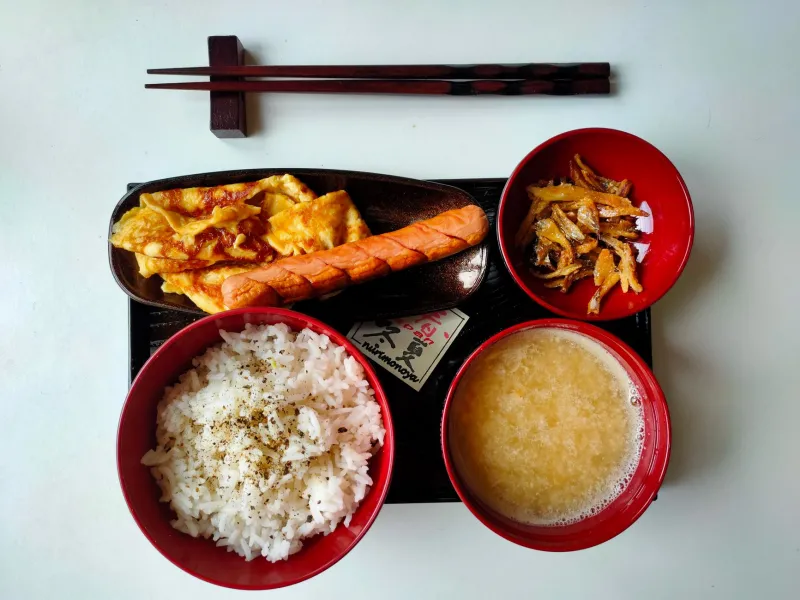
Rokusuke-don is a rice bowl that leans into this advantage. Topped with local pork belly braised in soy and mirin, pickled mountain vegetables, and a slow-cooked egg, the dish is simple enough that the rice itself becomes the star. Visitors who order it expecting standard donburi are consistently caught off guard.
"I've had hundreds of rice bowls in Japan," said Marcus Webb, a food writer from Chicago who visited last year. "This one made me stop mid-bite and just look at it."
3. Unzen Dashi Ramen: Heat That Comes From the Ground
Mount Unzen's geothermal activity doesn't just shape the landscape — it flavors the food. The area's hot spring eggs (onsen tamago) are a well-known souvenir, but the real sleeper hit is a local ramen variety built around a dashi made from Unzen's sulfuric spring water and local dried sardines.
The result is a broth with an edge — a faint minerality that adds complexity without tipping into bitterness. It's subtle enough that you might not identify it immediately, but it's the reason this ramen doesn't taste like anything you've had in Fukuoka or Sapporo.
The noodles are typically thin and straight, the toppings minimal. This isn't ramen trying to impress you with volume. It's ramen confident enough to let its broth do all the talking.
4. Kanboko: The Fish Cake That Shimabara Refuses to Simplify
Kanboko is Shimabara's own variation on kamaboko — the processed fish cake found throughout Japan. But where most regional kamaboko is mild and borderline forgettable, Shimabara's kanboko is made with a higher ratio of fresh local fish, pressed by hand, and often grilled rather than steamed.
The texture is firmer, the flavor more pronounced, and local producers treat it with the same seriousness that a Neapolitan pizza maker brings to their dough. You'll find it sold in small shops throughout the city, sliced thick and served with a sharp mustard that cuts through the richness.
This is the dish that food tourism most consistently overlooks, because it doesn't photograph dramatically and doesn't fit any familiar narrative about Japanese cuisine. It's just really, genuinely good.
5. Wild Fern and Mountain Vegetable Dishes: The Forager's Argument
Shimabara's interior — the slopes running up toward Unzen — produces a range of wild mountain vegetables (sansai) that appear on local menus in spring and early summer. Bracken fern, butterbur shoots, and a rotating cast of foraged greens show up in everything from tempura to rice dishes to miso soup.
What makes these different from sansai dishes elsewhere is the altitude and soil composition of the Unzen slopes, which produces vegetables with a slightly more bitter, more assertive character than lowland equivalents. Local cooks typically don't try to soften this — they lean into it, pairing the greens with mild proteins and simple seasonings that let the bitterness land cleanly.
This is the culinary argument that Shimabara keeps making, and that food tourism keeps missing: that the most interesting flavors aren't the most complicated ones. Sometimes the most interesting flavor is just a place, cooked honestly.