The Quiet Revolution: How Shimabara Became the Unlikely Mecca for America's Slow Living Movement

There's a particular kind of irony that only travel can produce. A place spends decades being overlooked, unbothered, and honestly pretty fine with both of those things — and then the people who are loudest about rejecting hype start whispering about it. Loudly. To everyone they know.
That's more or less what's happening with Shimabara right now.
The Shimabara Peninsula, tucked into the southwestern corner of Kyushu and flanked by an active volcano on one side and the Ariake Sea on the other, has never tried particularly hard to get your attention. There's no aggressive influencer campaign. No slick tourism board pushing targeted ads into your Instagram feed. And yet, if you spend any time in American communities built around digital minimalism, slow travel, or intentional living — the Reddit threads, the newsletters, the Signal group chats — Shimabara keeps coming up.
So what exactly is going on here?
Word of Mouth in the Age of Anti-Algorithm
The people who tend to discover Shimabara first share a few things in common. They've usually already done Tokyo. They've probably done Kyoto twice. They've started to feel a low-grade exhaustion with the kind of travel that requires spreadsheets and reservation windows six months out. They're looking for something that doesn't feel curated — and they're willing to dig for it.
Shimabara shows up in that digging.
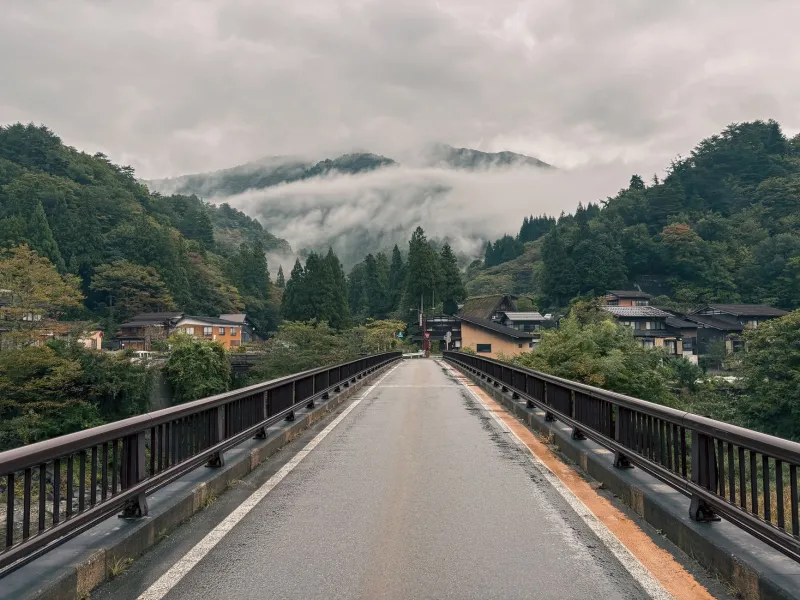
Once one person visits and comes back talking about the samurai district streets where you can hear your own footsteps, or the way the morning mist sits over Unzen's volcanic peaks like it's in absolutely no rush to go anywhere, word spreads. But it spreads the old-fashioned way — through conversations, through personal essays, through photos that weren't taken to perform anything. That's a different kind of momentum than a viral TikTok, and it tends to attract a different kind of traveler.
The minimalism community in particular has latched onto Shimabara for reasons that go beyond aesthetics. This is a place where the infrastructure of modern tourist convenience is genuinely thin. You're not going to find a Starbucks on every corner. English menus are a pleasant surprise rather than a given. The pace of daily life here isn't performing slowness for visitors — it just actually moves at a different speed. For people who've spent years trying to manufacture stillness in their regular lives, walking into a place that has it baked into its bones feels like a revelation.
The Tension Nobody Wants to Name Out Loud
Here's where it gets complicated, and it's worth being honest about it.
The very things that make Shimabara magnetic to the slow living crowd — its resistance to commercialization, its unselfconscious authenticity, its lack of tourism polish — are exactly what gets eroded when enough people show up looking for them. It's the traveler's oldest paradox, and Shimabara is now squarely in the middle of it.
Locals have noticed the uptick in foreign visitors, particularly younger Americans who arrive with light packs, big curiosity, and a genuine desire to engage rather than consume. By most accounts, that's been a net positive so far. The peninsula's economy has historically leaned on agriculture, fishing, and a modest domestic tourism trade centered around the onsen towns of Unzen. A new wave of international visitors spending money at family-run guesthouses and local restaurants isn't a problem anyone's losing sleep over.
But the question hanging in the air is: what happens if this becomes a wave instead of a trickle?
Shimabara doesn't have the infrastructure to absorb mass tourism, and it doesn't particularly want to build it. The castle town's preserved streets, the quiet fishing villages along the coast, the unhurried rhythms of daily life — these things exist precisely because development pressure has been low. The moment that changes, the thing everyone came looking for starts to disappear.
What Shimabara Is Actually Offering
Set aside the meta-conversation about tourism dynamics for a second, because the actual experience of being in Shimabara deserves its own space.
The historic samurai district — Teppo-machi and its surrounding streets — gives you the rare sensation of walking through a place that wasn't rebuilt for tourism. The white-walled residences and stone water channels fed by natural springs feel lived-in because they are. People actually live here. Kids actually play in these streets. The springs that run through the neighborhood aren't a set piece — they're functional, part of how the community has related to its landscape for centuries.
Unzen Jigoku, the volcanic hot spring area in the mountains above the peninsula, operates on geological time. The sulfurous vents and boiling mud pools don't care that you flew fourteen hours to see them. They were doing this long before tourists arrived and they'll keep doing it long after. There's something grounding about being in the presence of a natural process that has exactly zero interest in your experience of it.
The food culture here is similarly uninterested in performing for outsiders. Shimabara's champon — a hearty noodle dish with local seafood and vegetables — isn't plated for Instagram. It's just good, in the way that food made with regional ingredients and long practice tends to be good. The tofu made with local spring water has a texture and flavor that genuinely doesn't translate elsewhere. You have to be here for it.
The Future Nobody Can Quite Predict
The slow living community's discovery of Shimabara puts both parties in an interesting position. Travelers who genuinely value authenticity have to reckon with the fact that their presence — however mindful — participates in the process of change. And Shimabara itself, if it ever decides it wants to shape its own tourism future, has to figure out how to welcome people without becoming something it's not.
The most optimistic read is that the kind of traveler Shimabara is currently attracting is also the kind most likely to tread lightly. People who show up specifically because a place hasn't been overrun tend to be motivated to keep it that way. They stay longer, spend more locally, and leave with a stake in the place's continued wellbeing. That's not nothing.
The more cautious read is that good intentions don't automatically produce good outcomes, and that the gap between wanting to travel responsibly and actually doing it can be surprisingly wide.
What's clear is that Shimabara's moment — whatever shape it ultimately takes — is happening now. The peninsula that spent decades being overlooked is suddenly in focus, and the people paying attention to it are doing so for reasons that feel, at least for the moment, like the right ones.
Whether that's enough to protect what makes it worth paying attention to in the first place is the question nobody's quite figured out yet. But it's a good question to sit with, preferably somewhere quiet, with a bowl of champon and no particular place to be.