Why Shimabara Makes Every Goodbye Feel Like a Mistake

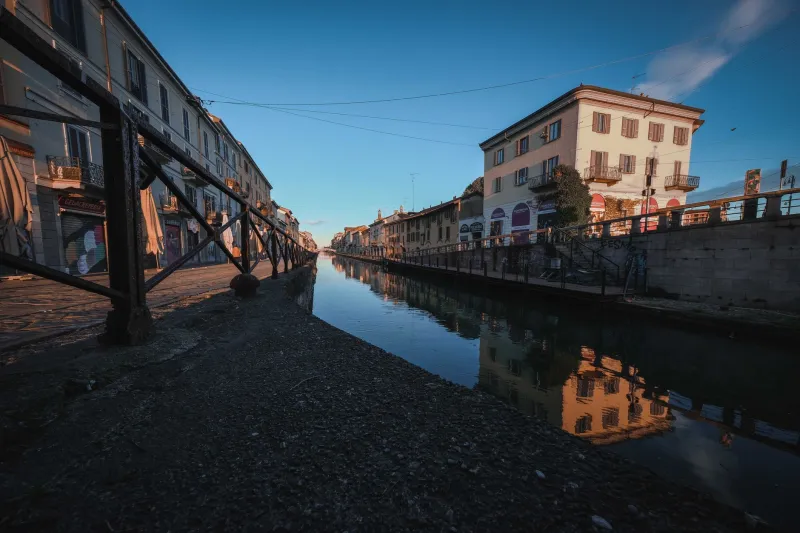
Kayla Marsh had her bags packed by 9 a.m. Her ferry was at noon. She'd done everything on her list — walked the castle grounds, soaked in the onsen, eaten the guzoni soup, photographed the carp swimming lazily through the street-side canals. By any reasonable measure, she was done.
She sat on the edge of her futon anyway, staring at the sliding screen door, and didn't move for forty minutes.
"I kept thinking I'd missed something," she said, recalling her first trip to Shimabara two years ago. "Not a landmark. Not a restaurant. Just... something. Like I'd been in the middle of a conversation and someone cut the call."
She wasn't the only one.
Ask around in the guesthouses and ryokans scattered across Shimabara Peninsula and you'll hear variations of the same story. Travelers who booked two nights and spent the third staring at their departure confirmation, quietly furious at past-them for not booking longer. People who've rescheduled ferries. People who haven't.
So what is it about this place?
The Guilt Nobody Talks About
It sounds almost absurd to frame it this way, but there's a specific emotional texture to leaving Shimabara that a surprising number of visitors describe as guilt. Not regret exactly — though that's there too — but something closer to the feeling you get when you leave a dinner party before the host has finished a story.
Dr. Renee Holloway, a behavioral psychologist based in Portland who studies place attachment and travel psychology, offers a framework that fits.
"When people enter low-stimulation, high-sensory environments — places that are quiet but rich in texture — the brain gradually downshifts from its default hypervigilance mode," she explains. "That process takes time. And if you leave before it completes, you carry the unresolved tension with you. Your nervous system was mid-reset. You interrupted it."
In other words, Shimabara might be working on you even when you think you're just sightseeing.
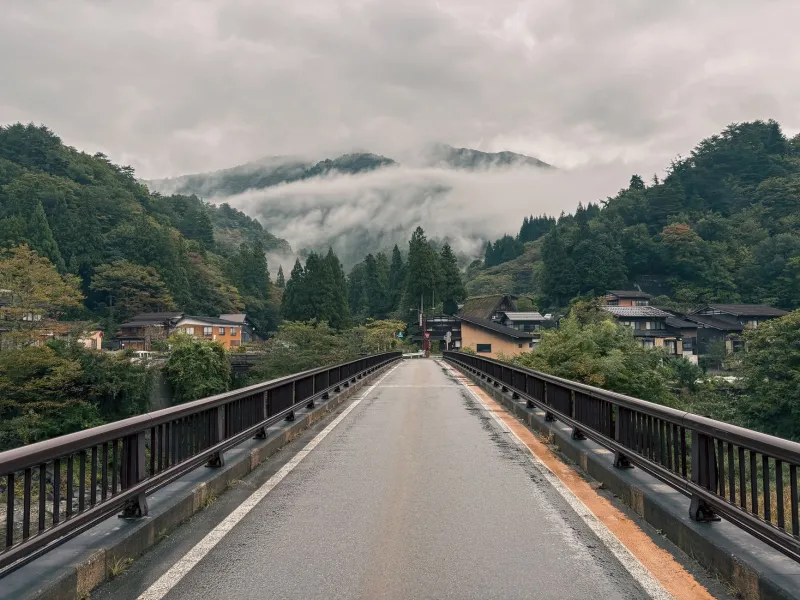
The peninsula's particular combination of factors — the slow pace of its fishing villages, the geological drama of Unzen's volcanic landscape, the weight of its complicated history, the spring water flowing through its streets like the town is perpetually exhaling — creates an environment that pulls the body toward a state it rarely gets to occupy. Calm. Unhurried. Present.
Leaving before that state fully settles is, neurologically speaking, a little like waking someone up during REM sleep.
What Locals Notice
Takeshi Yamamoto has run a small guesthouse in Shimabara for over a decade. He's watched hundreds of guests check in tightly wound and check out visibly different. He's also watched a lot of them linger.
"They come down for breakfast and they're already quiet," he says, through a translator. "Not sad. Just... slower. They eat more carefully. They look out the window more. Then they go upstairs and I hear them repacking very slowly."
He laughs. "Sometimes they come back down and ask if there's a later ferry."
Yamamoto-san doesn't think there's anything mysterious about it. To him, it's simply the natural result of a place that hasn't chased tourism the way other Japanese destinations have. Shimabara never optimized itself for the two-day turnaround. It doesn't have the density of attractions that lets you feel efficiently satisfied. There's no checklist that, once completed, signals that you're done.
"In Tokyo, you do the thing. You take the photo. You move on," he says. "Here, there's no moment like that. There's just more."
The Incompleteness Is the Point
This is maybe the most counterintuitive thing about Shimabara: the sense of incompleteness that haunts your departure isn't a flaw in the experience. It's the experience.
The peninsula doesn't resolve. It doesn't give you a final scene that wraps everything up. The volcano is still active. The history — a bloody 17th-century rebellion, a catastrophic 20th-century eruption, centuries of quiet resilience — is still present in the landscape, in the rebuilt neighborhoods, in the museum that sits where entire communities were buried under pyroclastic debris. The water still flows. The fishermen still go out early.
None of it is waiting for you to finish processing it before moving on to the next thing.
For Americans especially — trained by a travel culture that prizes efficiency, bucket lists, and the clean satisfaction of a destination fully consumed — that open-endedness can feel disorienting. We want the stamp in the passport, the story that's complete enough to tell at a dinner party. Shimabara doesn't give you that. It gives you something harder to carry and harder to put down.
"I've been back three times," says Marcus Webb, a graphic designer from Austin who first visited Shimabara on a whim after a work trip to Fukuoka. "Each time I think I'll finally feel finished with it. Each time I get on the ferry home and I'm already thinking about coming back. I genuinely don't know if that's healthy."
He says it with a grin, which suggests he's made a kind of peace with it.
Why That Feeling Is Worth Chasing
Here's the honest pitch: if you leave Shimabara feeling like you should have stayed longer, that's not a travel failure. That's the peninsula doing exactly what it does.
Most places we visit are designed to be consumed. They offer a finite set of experiences, a predictable arc from arrival to departure, a sense of closure that lets you file the trip neatly into memory and move on. Shimabara isn't built that way — not by design and not by accident, but simply because it's a living place, not a product.
The guilt, the pull, the vague sense of betrayal when you zip your bag — that's your nervous system recognizing something real. You found a place that wasn't performing for you. And you left before it finished being honest.
Kayla Marsh went back the following spring. She booked five nights.
"I still felt it when I left," she admits. "But it was different. Less like I'd missed something. More like I was leaving something I knew I'd come back to."
That, maybe, is the closest thing to resolution Shimabara offers. Not an ending. Just a reason to return.