Delete the App, Keep the Memory: What Shimabara Taught Me About Actually Being There
Here's a weird thing to admit: some of my most-liked travel photos are also the ones I remember least. The shot of a crowded temple in Kyoto with the perfect golden-hour light? I had to check the geotag to remember which one it was. But I can still feel the specific weight of the air in Shimabara on a Tuesday morning in November — the sulfur threading through the cold, the sound of water running somewhere under the stone streets, a vending machine humming outside a closed souvenir shop. No photo. Just memory.
That's the Shimabara paradox, and once you notice it, you can't unsee it.
The Instagram Audit You Didn't Ask For
When most American travelers start planning a Japan trip, the itinerary builds itself around content opportunities. Fushimi Inari's thousand torii gates. The deer park in Nara. Shibuya crossing at night. These are extraordinary places — genuinely — but they're also locations where a significant part of your brain is already running a parallel process: framing, filtering, captioning, anticipating the response. You're not just visiting. You're producing.
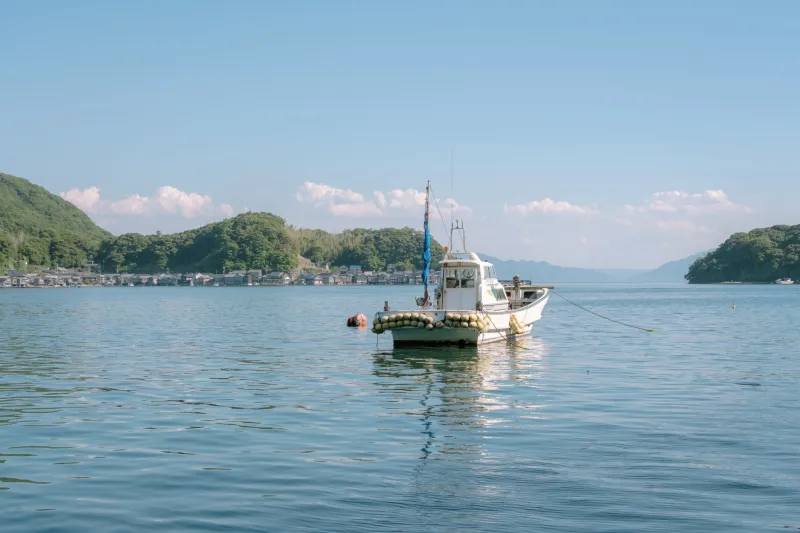
Shimabara doesn't play that game. There's no viral shorthand for it. There's no iconic shot that a million other tourists have already taken from the exact same angle with the exact same lens. When you arrive here — on the ferry from Kumamoto, watching the peninsula rise out of the Ariake Sea — you're not trying to recreate something you've already seen on a screen. You're just looking.
That difference is smaller than it sounds and larger than you'd expect.
What Your Brain Does When Nobody's Watching
Neuroscientists have been quietly building a case against the way we document our lives. A series of studies — including widely cited research from psychologist Linda Henkel at Fairfield University — found that people who photographed objects in a museum remembered them less accurately than people who simply observed them. The act of outsourcing memory to a device appears to signal to the brain that it doesn't need to do the encoding work itself.
But there's a second layer to this that goes beyond the camera itself. It's about audience. When you're shooting for Instagram, you're not just documenting — you're performing. Your attention splits between the experience in front of you and the imagined reaction of people who aren't there. You're writing captions in your head. You're thinking about whether this fits your grid. You are, in a very real neurological sense, somewhere else.
Shimabara doesn't give you a lot to perform with. And paradoxically, that's when the place starts to actually get into you.
The Stuff That Sticks
Ask someone who's been to Shimabara what they remember, and the answers tend to be oddly specific and sensory. Not "the castle" but the way the castle's stone walls felt slightly damp on a gray morning. Not "the onsen" but the strange intimacy of sitting across from a retired fisherman in a tub the size of a walk-in closet, both of you staring at the ceiling, neither of you needing to say anything. Not "the food" but the particular sweetness of tofu made from water that comes up through volcanic rock, eaten at a table that wobbled slightly, in a restaurant where the owner's kid was doing homework in the back.
These are not Instagrammable moments. They are, however, unforgettable ones.
There's a concept in psychology called elaborative encoding — the idea that memories stick when they're connected to emotion, sensory detail, and personal meaning rather than just visual information. The low-stakes, unperformed nature of a place like Shimabara creates the conditions for exactly that kind of encoding. You're not curating. You're just living inside the experience, and your brain, relieved of its production duties, gets to do what it was actually built to do.
The Burden We Carry Into Famous Places
It's worth naming something most of us don't say out loud: visiting famous places is exhausting in a way that has nothing to do with jet lag. There's the crowd management, sure. But there's also the low-grade anxiety of wondering if you're doing it right, seeing it correctly, getting your money's worth. You've seen the place so many times in photos that you're essentially trying to verify a rumor rather than have an experience.
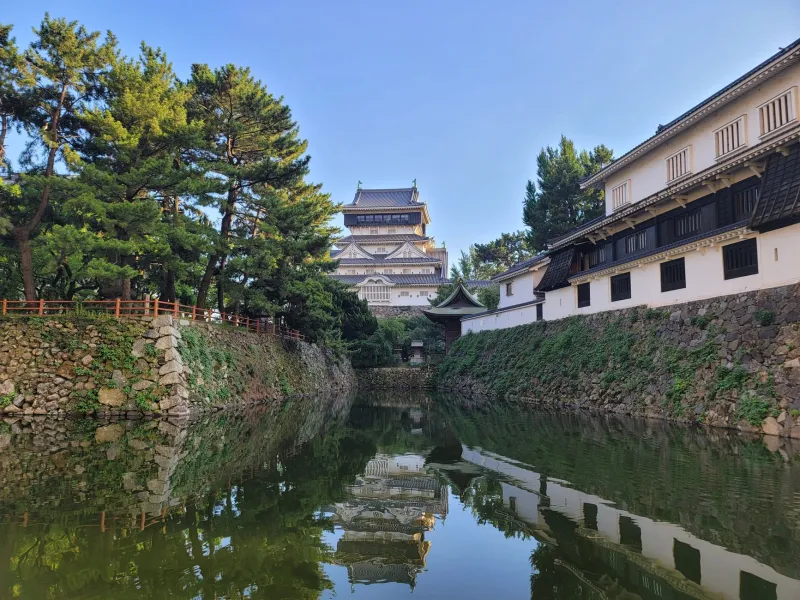
Shimabara removes that burden almost entirely. There is no canonical version of this place lodged in your visual cortex from years of scrolling. The Shimabara Castle is genuinely impressive — a white tower rising above reconstructed samurai residences, with a history tangled up in one of feudal Japan's most dramatic uprisings — but you're not trying to match it to a template. You're just standing in front of it, working it out for yourself.
The volcanic landscape around Mount Unzen operates the same way. It's not a background. It's not a set. It's just this alive, sulfurous, quietly threatening geological fact that you have to reckon with on its own terms. The scarred earth from the 1991 eruption is still visible in places. It doesn't look like a screensaver. It looks like something actually happened here.
Practical Notes for the Recovering Content Creator
If you're used to traveling with your phone in your hand, Shimabara will feel strange at first. Not bad-strange — just unfamiliar, the way silence feels loud when you first turn off the TV. Give it a day. Take a walk along the spring-water channels that run through the old town, the ones locals call shimizu, where koi drift under stone bridges and the water is so clear it looks fake. Don't photograph it. Just watch it for a few minutes.
Notice what happens in your chest.
You can still take photos here — nobody's policing your camera roll. But you'll probably find that you take fewer, and that the ones you do take feel chosen rather than compulsive. The difference between hunting for content and actually wanting to remember something.
That's the Shimabara shift. It happens quietly, usually sometime on the second day, when you realize you haven't checked your follower count in several hours and you genuinely don't care.
What You Actually Take Home
The best souvenir from Shimabara isn't a thing you can buy in a shop or a photo you can post. It's the slightly disorienting realization that you were fully present somewhere — that a place got under your skin not because it was optimized for virality but because it was just relentlessly, stubbornly, quietly itself.
American travel culture has spent a decade teaching us that experiences only count if they're shareable. Shimabara makes a gentle, persistent argument to the contrary. The memories you build here are yours in a way that the greatest hits of better-known destinations often aren't. Nobody else has the exact same reference point. Nobody can like it or repost it or reduce it to a caption.
It's just yours. And it turns out that's the thing that makes it last.