Once Is Never Enough: The Real Reason People Keep Flying Back to Shimabara
There's a running joke among a certain type of American traveler — the kind who's done Kyoto twice, ticked off Tokyo, and considers themselves reasonably fluent in Japan. The joke goes like this: you visit Shimabara once expecting a quick side trip, and then somehow, a year or two later, you're booking flights again. And then again.
It's not a joke that lands easily in conversation, because explaining why you keep going back to a small volcanic peninsula in Nagasaki Prefecture isn't straightforward. It's not like Vegas, where the pull is obvious. Shimabara doesn't promise spectacle. It doesn't try to dazzle. And yet, the return rate among American visitors is quietly becoming one of the more interesting stories in Japanese tourism — one that travel researchers and repeat visitors themselves are only beginning to piece together.
The Difference Between a Destination and a Place
Travel psychologist Dr. Renee Calloway, who studies long-term behavioral shifts in travelers, draws a sharp line between what she calls "destinations" and "places." Destinations are experienced. Places are inhabited — even briefly. "Most tourism is designed around consumption," she explains. "You consume the view, the meal, the temple. But certain locations create a different relationship. They slow the visitor down enough that something more like genuine presence happens."
Shimabara, by most accounts, falls firmly into the second category. It's not organized around tourist throughput. There aren't lines snaking around famous landmarks at 7 a.m. The locals aren't performing their culture for visitors — they're just living it, in a town shaped equally by Christian martyrdom, volcanic catastrophe, and the kind of daily resilience that doesn't need an audience.
For Americans conditioned to optimize every travel day, that absence of performance is initially disorienting. And then, for many, it becomes the whole point.
What First-Timers Miss — And Why They Come Back for It
Talk to repeat visitors and a pattern emerges almost immediately. The first trip to Shimabara is often described as incomplete — not because the trip was bad, but because it takes time to calibrate to the peninsula's pace. "I spent my first visit waiting for something to happen," says Marcus, a 38-year-old project manager from Austin who has now visited Shimabara three times. "By day two I started to realize nothing was going to happen — and that was actually the experience. I just didn't know how to receive it yet."
That recalibration takes most Americans longer than a single trip. The first visit cracks something open. The second visit is when people actually walk through the door.
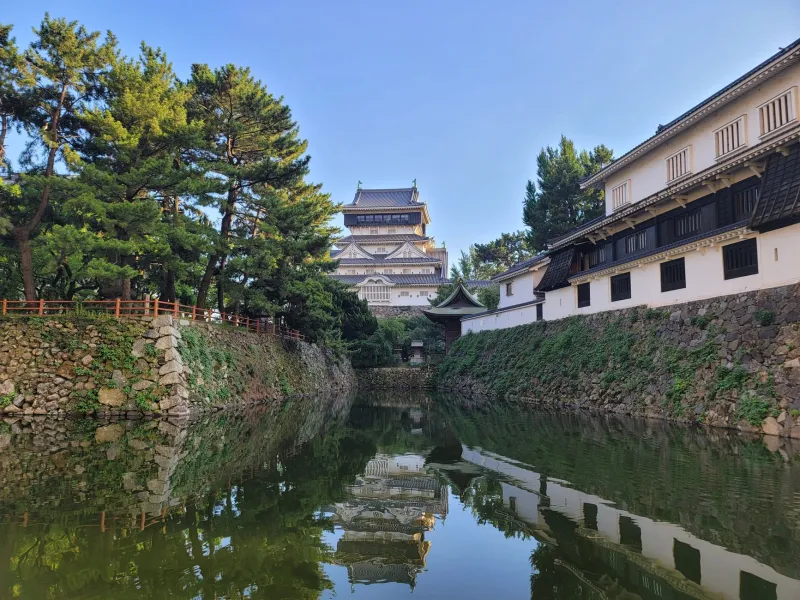
This isn't unique to Shimabara, but the peninsula seems to accelerate the process in ways that more polished destinations don't. Partly it's the scale — Shimabara City is compact and walkable, which means you run into the same faces, the same shopkeeper, the same elderly man feeding koi in the castle moat. Familiarity builds faster here than it does in Kyoto or Osaka, where the sheer volume of tourists creates a kind of anonymity that insulates visitors from genuine connection.
The Shimabara Effect: Change That Sticks
What's harder to explain — and what keeps coming up in conversations with repeat visitors — is that Shimabara seems to produce lasting behavioral changes rather than the temporary mood lift that most vacations deliver.
Jennifer, a 44-year-old marketing director from Seattle, describes coming back from her first Shimabara trip and noticing she'd stopped compulsively checking her phone during meals. "I didn't even realize I'd picked up the habit there until I was home and it was just... gone. I wasn't trying to change. It just happened." She returned eighteen months later partly out of curiosity — to see whether what she'd felt was real or just the residue of jet lag and novelty.
"It was real," she says simply.
Calloway has a framework for this. She argues that genuine environmental immersion — as opposed to curated tourist experience — creates what she calls "behavioral echoes," patterns absorbed unconsciously during travel that surface back home. "The brain is incredibly sensitive to environment. When you spend time in a place that operates at a fundamentally different tempo and set of values, you absorb some of that. Whether it sticks depends on how deep the immersion went."
Shimabara, with its natural hot springs, its fishing villages, its streets where water literally flows from the ground in channels called shimizu, creates immersion almost by default. There's no resort bubble to retreat into. You're just there, in the town, with the people, with the volcano watching from above.
Layers That Reveal Themselves Slowly
There's also a structural reason people return: Shimabara is genuinely layered in ways that take multiple visits to unpack. The peninsula's history alone — the Shimabara Rebellion of 1637, one of the largest peasant uprisings in Japanese history, rooted in Christian faith and economic desperation — is dense enough to spend days exploring. The Unzen volcanic disaster of 1991, which buried entire neighborhoods in pyroclastic flow and left the ruins preserved as a memorial, hits differently the second time, once you've spoken to locals who remember it.
First-time visitors often skim the surface of this history because they don't yet have the context to know what they're looking at. Return visitors come back with questions. And Shimabara, unlike more tourist-saturated destinations, still has the kind of unhurried locals who will actually answer them.
Why This Isn't Just Nostalgia
It would be easy to dismiss repeat visits as simple nostalgia — the comfort of returning to somewhere that felt good. But the visitors themselves push back on that framing. "I'm not going back for the memory," Marcus says. "I'm going back because I'm different than I was the last time, and I want to see what I notice now that I didn't before."
That's a meaningfully different relationship with travel than most Americans are taught to have. We're conditioned to collect experiences, to move forward, to always be optimizing toward the next thing. Shimabara, somehow, keeps offering a counterargument — quietly, without making a fuss about it, the way the peninsula does most things.
The locals even have a word for it: yokabai, a Kyushu dialect expression meaning something close to "this is good" or "this is enough." It's where this site gets its name. And it might be the most honest description of what keeps people coming back — not because Shimabara is the best place in Japan, or the most famous, or the most photogenic. But because for a growing number of Americans who've been everywhere else first, it turns out to be enough. More than enough, actually. The kind of enough that sticks.