Why the Oldest Place You'll Ever Visit Might Be the Most Clarifying
Here's a weird thing that keeps happening to Americans who visit Shimabara: they arrive expecting a quaint little history lesson, and they leave feeling like they just had a tune-up they didn't know they needed.
Not refreshed in the vague, Instagram-caption kind of way. Actually clearer. Like the static finally cut out.
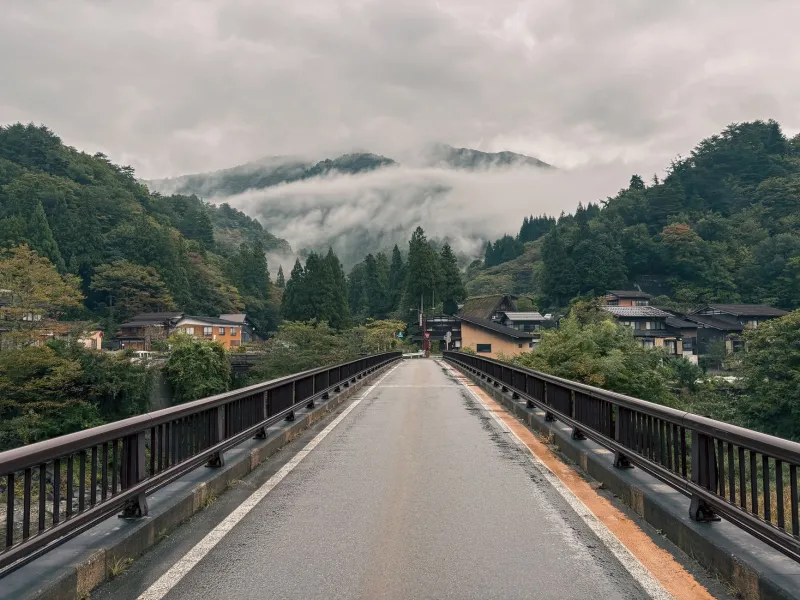
Shimabara, sitting quietly on its volcanic peninsula in Nagasaki Prefecture, hasn't exactly been racing to catch up with the rest of the world. The fishing boats still go out early. The castle still anchors the town center. The old samurai district still smells like cedar and damp stone. And yet — paradoxically, stubbornly — this place that looks like it's stuck in the past has a way of making you feel more present than you've been in years.
That's the Shimabara paradox, and it's worth unpacking.
A Town That Didn't Bother Keeping Up
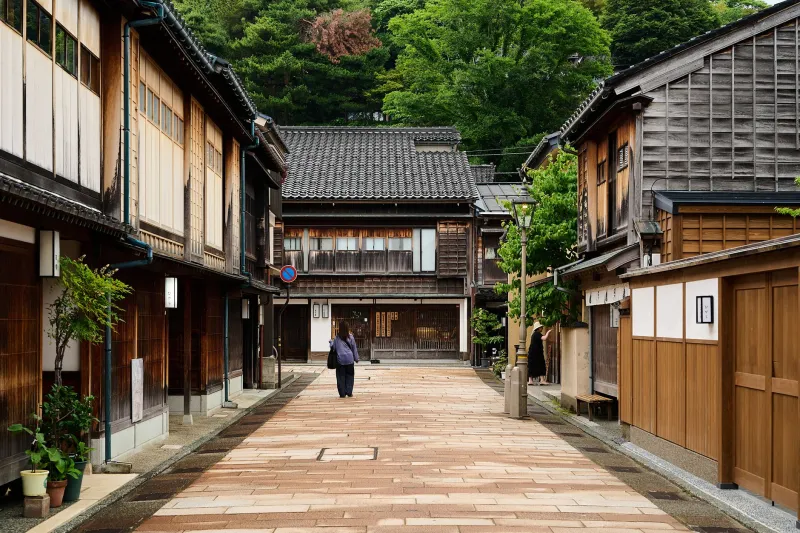
Walk through the Teppo-machi samurai district on a weekday morning and you'll notice something that takes a second to name. There are no notifications. Not just on your phone — in the environment. No ambient screens, no algorithmic storefronts trying to pull your attention sideways, no background hum of optimization.
The streets are narrow and deliberately so. The water channels running alongside them — fed by springs from Mount Unzen — have been flowing in roughly the same path for centuries. Local fishermen still use techniques passed down through families rather than scaled-up commercial operations. Pottery studios operate on the logic of one craftsperson, one kiln, one day at a time.
None of this is performative preservation the way some heritage districts can feel. Shimabara isn't a museum of itself. It's just a place where the traditional methods survived because they worked, and nobody had a strong enough reason to replace them.
For an American visitor conditioned to interpret "old" as "obsolete," this is genuinely disorienting — in the best possible sense.
Why Backward-Looking Places Make You Think Forward
There's a psychological concept called cognitive offloading — basically, the way we outsource mental tasks to our devices and environment. Smartphones are the most obvious example. GPS means we don't have to hold maps in our heads. Calendars mean we don't have to remember dates. Recommendation algorithms mean we don't have to decide what to eat or watch or care about.
This isn't inherently bad. But it does mean that in a hyper-optimized environment, your brain is constantly being prompted, guided, and relieved of the work of independent thought.
Shimabara removes a lot of that scaffolding.
When you're navigating a town that doesn't have a lot of English signage, where the best lunch spot isn't on Yelp, and where the guy running the tofu shop has been doing it the same way for forty years — your brain actually has to engage. It has to observe, interpret, and decide. Muscles you forgot you had.
And here's what visitors consistently report: once those muscles get going again, they don't shut off. You start noticing things. You start thinking in longer sentences. You start making connections between ideas that had been sitting in separate compartments for months.
Going backward, it turns out, can reboot the forward-thinking parts of your brain.
The Specific Things Shimabara Still Does the Old Way
It helps to be concrete here, because "traditional" can sound like marketing copy. In Shimabara, the old ways are visible and specific.
The guzoni hot pot — a dish rooted in the region's Christian history and the aftermath of the Shimabara Rebellion — is still cooked in ways that reflect centuries of culinary memory. The ingredients aren't exotic or fusion-forward; they're honest and local, shaped by what the land and sea have always provided.
The spring water that feeds the town's famous mizu no miyako (city of water) identity still flows through public channels where residents fill containers for cooking and drinking. It's not a tourist attraction, exactly — it's just how water works here.
The carp that swim through those channels aren't there for aesthetics; they're a sign of water quality, a living indicator system that predates any monitoring app.
And the architecture — the low-slung merchant houses, the castle walls, the modest temples — doesn't shout. It just stands there, doing what it's been doing, indifferent to whether you photograph it or not.
What American Travelers Actually Say
Talk to Americans who've spent a few days in Shimabara — really spent time, not just passed through on a day trip from Nagasaki — and the language they use is telling.
"I felt like I could think again."
"I didn't realize how much noise I was carrying until it went quiet."
"It's the first place I've traveled where I didn't feel like I was consuming it."
That last one is interesting. In a lot of high-profile destinations, there's an implicit transaction: you show up, the place performs, you document it and move on. Shimabara doesn't perform. It doesn't have a lot of patience for being consumed. It's just there, doing its thing, and if you want to understand it, you have to slow down enough to pay attention.
For travelers used to being catered to — and American tourism infrastructure trains us to expect exactly that — the lack of performance can feel like a rebuke at first. Then it starts to feel like relief.
The Counterintuitive Argument for Slowing Way Down
We tend to associate progress with speed. Faster internet, faster delivery, faster everything. And when we travel, we often bring that logic with us — more cities, more sights, more stamps in the passport.
Shimabara is a direct challenge to that logic.
The place moves slowly because slow is appropriate to what it is. The fishing boats don't rush; the fish aren't waiting on a schedule. The pottery takes as long as it takes. The castle has been there for centuries and isn't going anywhere. Time in Shimabara doesn't feel wasted — it feels used, in the old-fashioned sense of the word.
And something interesting happens to visitors who surrender to that pace. They stop measuring the day in productivity units. They start measuring it in meals eaten, conversations attempted, hills climbed. The metrics shift.
By the end of a few days, most people find they've thought more clearly, slept better, and arrived at decisions they'd been avoiding for months. Not because Shimabara is magical — but because it gave their brains the conditions they needed to actually function.
Come Backward, Leave Clearer
If you're the kind of traveler who needs to be entertained every hour, Shimabara might frustrate you. There's no theme park logic here, no itinerary that gets you through the highlights in a morning.
But if you've been running on empty for a while — if the pace of modern American life has left you feeling scattered, reactive, and vaguely behind on everything — this peninsula might be exactly the recalibration you're after.
You'll walk through streets that look like they belong to another century. You'll eat food made from recipes older than your country. You'll watch fishermen work in ways that haven't changed in generations.
And somewhere in the middle of all that deliberate, unapologetic backwardness, you'll find yourself thinking with a clarity you forgot was possible.
That's the Shimabara paradox. Go back far enough, and you might finally catch up with yourself.