The More You See, The More You Owe: Shimabara's Strange Hold on the People Who Visit
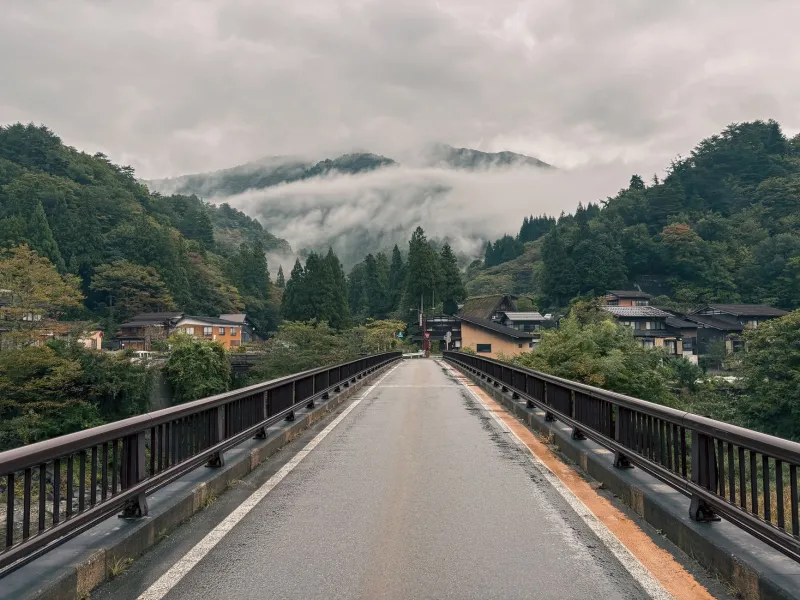
There's a moment — usually somewhere around day two or three — when it hits you. You're standing at the edge of something: a volcanic ridge, a moss-covered castle wall, a back alley where an old woman is hanging laundry and glances at you with a look that says you don't know the half of it. And you realize, with a low, sinking certainty, that you have not even come close to understanding this place.
This is Shimabara's paradox. The longer you stay, the more the peninsula reveals — and the more it reveals, the more obvious it becomes how much you're missing. Leaving doesn't feel like completion. It feels like abandonment.
American travelers are not used to this. We're trained on destinations that are designed to be consumed: the highlights, the photo spots, the curated walking tours. You do the thing, you check the box, you go home with a full camera roll and a sense of closure. Shimabara doesn't work like that. It accumulates on you instead of the other way around.
The Peninsula Is Bigger Than It Looks on a Map
Part of what makes this happen is sheer geographic complexity. The Shimabara Peninsula juts into the sea between two of Japan's most storied bodies of water — the Ariake Sea and the Tachibana Bay — and it does so with a volcano at its center that has been actively reshaping the land for centuries. Mount Unzen doesn't just loom over the peninsula; it participates in it. Lava flows that buried entire neighborhoods in the 1990s are still visible from the road. Fumaroles hiss from the earth in Unzen Onsen. Hot springs bubble up along the coast with zero fanfare, as if geological drama were just a Tuesday.
You can drive a loop around the peninsula in a few hours. But driving around it and knowing it are completely different propositions. The coastal villages alone — each with their own fishing rhythms, their own relationship to the sea, their own quiet suspicion of outsiders that slowly softens into something warmer — could occupy a week of careful attention.
Most visitors don't have a week. And so they leave owing something to the places they only glimpsed.
History That Refuses to Sit Still
Then there's the history, which is not the kind you can absorb in an afternoon at a museum.
Shimabara carries centuries of layered tension: Christian missionaries and feudal lords, the catastrophic rebellion of 1637 that changed the course of Japanese religious policy, the Dutch traders who watched from a distance, the hidden believers who kept their faith alive underground for generations. You can walk through Shimabara Castle and read the placards and feel like you've got a handle on it. Then you'll wander into a side street and find a stone marker, or a small shrine that doesn't quite match the Shinto iconography around it, and you'll realize the official story is just the surface.
This is the kind of place that rewards the person who slows down and asks questions — ideally in some broken Japanese with a lot of gesturing — over the person who moves efficiently from attraction to attraction. The stories are there. They're just not labeled.
And that's the thing: Shimabara doesn't perform its history for you. It holds it, quietly, and offers pieces to the people who linger.
Why This Feels Different From Regular FOMO
Here's where it gets psychologically interesting. The restlessness you feel at the end of a Shimabara trip is not the same as the anxiety you get from scrolling Instagram and seeing a travel influencer in a place you haven't been. That's manufactured urgency — someone else's highlight reel triggering your insecurity.
What Shimabara produces is something older and more honest. It's the feeling of a conversation you didn't want to end. The specific ache of a book you weren't ready to close. You're not afraid of missing out on something trendy. You're mourning the version of this trip that could have gone deeper, and you know — with real certainty — that the depth was there for the taking.
That distinction matters. One kind of longing is about status and comparison. The other is about genuine connection to a place that gave you more than you expected and asked for more time than you budgeted.
The Americans who return to Shimabara — and there's a growing number of them, people who came once and found themselves rearranging future itineraries to come back — almost universally describe it in terms of the second kind. "I felt like I'd only read the first chapter," is a phrase that comes up with striking frequency.
The Incompleteness Is the Point
Here's the counterintuitive argument: the fact that you can't finish Shimabara is not a flaw in the destination. It's the destination's greatest feature.
We live in a culture of optimization. We want to maximize the return on every experience, extract the most value from every trip, leave feeling like we got everything the place had to offer. Shimabara quietly refuses to cooperate with this framework. It is not optimizable. There will always be a village you didn't reach, a trail you ran out of daylight on, a local you started talking to and had to leave mid-conversation because your ferry was departing.
And instead of feeling cheated, most visitors feel something they struggle to name — a kind of grateful incompleteness. Like the place trusted them enough to show them its edges without pretending those edges were the whole picture.
That's rare. In a world of destinations engineered for satisfaction, Shimabara is engineered for nothing. It just is, in all its volcanic, historically dense, quietly coastal reality. And you walk away from it the way you walk away from a place that mattered — not finished with it, but changed by it.
So Should You Go?
Yes. Absolutely. Go knowing you won't see everything. Go knowing you'll board your ferry or your bus back to Nagasaki with a list of things you meant to do and didn't. Go knowing that the list will feel less like failure and more like a promise.
Book more time than you think you need. Talk to people even when the language barrier makes it awkward. Eat the things that don't have English descriptions. Walk past the obvious spots and into the streets that don't appear on any travel blog.
And when you leave — because you will have to leave — let the incompleteness sit with you. It means the place was real. It means something happened that a highlight reel couldn't contain.
Shimabara doesn't offer closure. It offers the kind of openness that keeps you honest about how much world there still is to pay attention to.
That's not a reason to hesitate. That's the whole reason to go.