Why the Quiet Places Win: The Science Behind Why Shimabara Outlasts Tokyo in Your Memory
Ask anyone who's been to Tokyo what they remember most, and you'll get a highlight reel: the neon in Shinjuku, the crossing in Shibuya, the sushi at Tsukiji. Ask them to fill in the spaces between those moments, and watch them struggle. The days blur. The hours vanish. The city gave them everything, and somehow they came home holding almost nothing.
Now ask someone who spent a week in Shimabara.
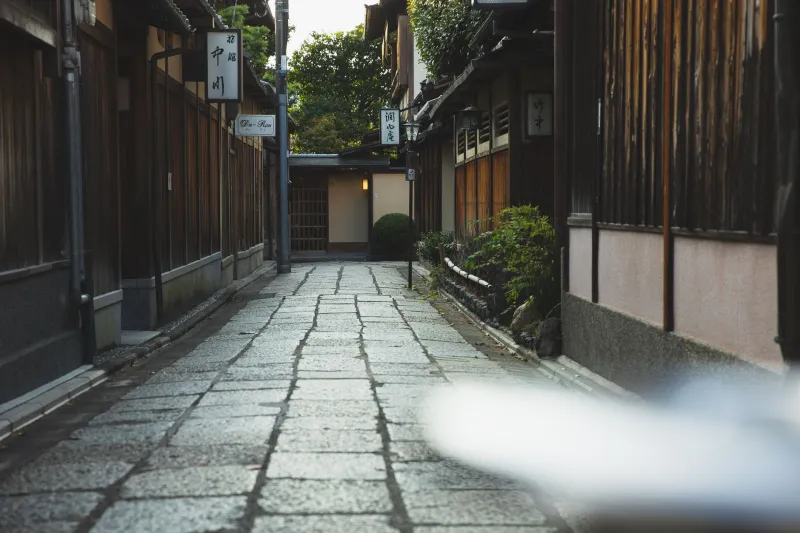
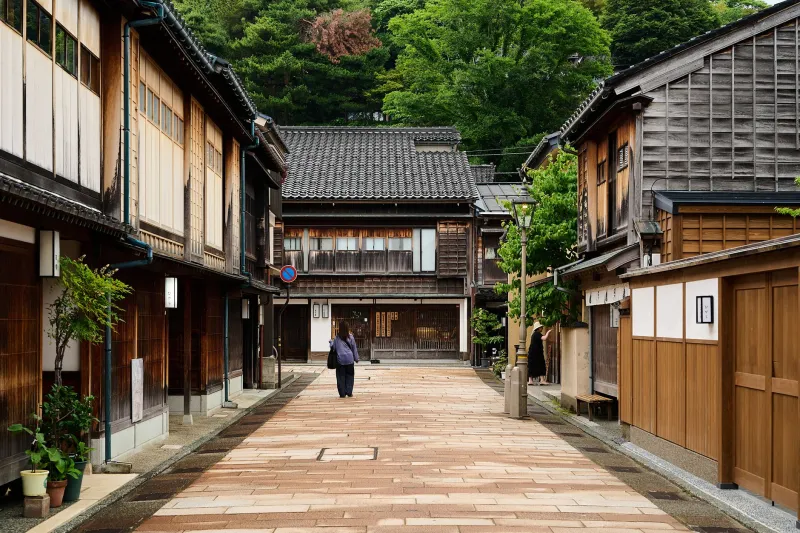
They'll tell you about a specific afternoon. The way the light moved across Unzen's sulfur vents. A conversation with a woman at a neighborhood tofu shop who didn't speak English and didn't need to. The particular sound of water running through the stone channels that lace through the old samurai district. They'll tell you these things slowly, carefully, like they're pulling them from somewhere close to the chest.
That's not a coincidence. That's neuroscience.
Your Brain on Overstimulation
Here's something the travel industry doesn't want you thinking about too hard: the more a destination throws at you, the less of it you actually keep.
When your brain encounters constant novelty — flashing lights, crowds, rapid-fire stimuli, the relentless churn of a major tourist city — it activates something researchers call the dopamine-seeking circuit. You're not experiencing the city so much as chasing it. Each new sensation triggers a micro-hit of anticipation, which gets replaced almost immediately by the next sensation. It feels electric in the moment. But the neurological cost is real: when everything is stimulating, your brain stops tagging individual experiences as worth encoding into long-term memory. The signal-to-noise ratio collapses.
Psychologists call this "continuous partial attention," and it's the same mechanism that makes scrolling through Instagram feel satisfying and empty at the same time. Your brain is busy, but it isn't present.
Shimabara doesn't do that to you. And that, weirdly, is why it sticks.
The Memory Advantage of Doing Less
When a place slows you down — when it doesn't compete for your attention at every corner — something different happens neurologically. Your brain shifts from scanning mode into what cognitive scientists call "default mode network" activity. This is the mental state associated with reflection, emotional processing, and long-term memory consolidation. It's the same state you enter during a long shower or a quiet walk when you're not listening to a podcast. It's also, not coincidentally, when your brain does its best work at turning experiences into lasting memories.
Shimabara is basically a default mode network generator.
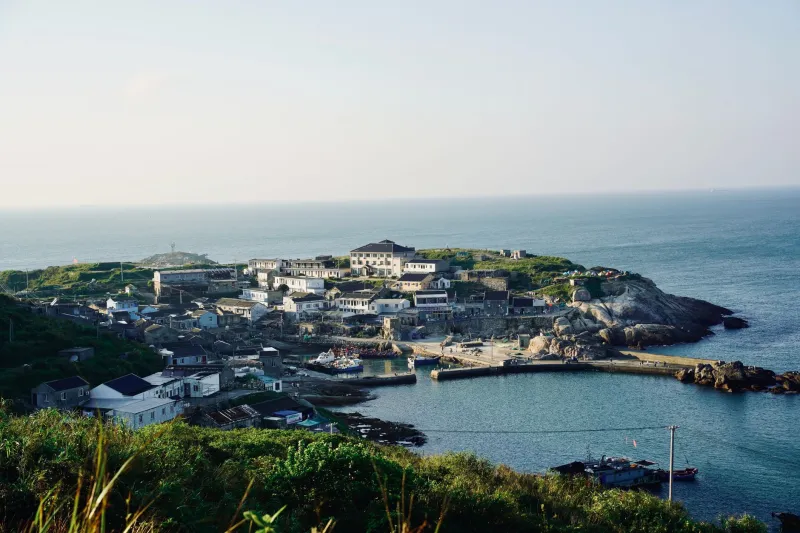
The peninsula moves slowly. The streets in the castle town are rarely crowded. The volcanic landscape around Unzen asks you to look at one thing — just one — for longer than you're used to. The onsen towns invite stillness. The fishing villages along the coast offer scenery that doesn't demand a reaction, it just is. And in that space, your brain starts doing what it was built to do: make meaning.
Researchers at the University of California, Irvine have found that emotionally resonant experiences — even quiet, understated ones — are encoded more durably than high-stimulation events, precisely because the brain has the cognitive bandwidth to process them fully. Tokyo gives you a thousand moments. Shimabara gives you ten. But those ten get filed somewhere deep.
The Bucket List Problem
Americans, specifically, have a complicated relationship with travel. We're raised on the idea that more is more — more destinations, more photos, more checked boxes. The bucket list is practically a cultural institution. And there's nothing wrong with ambition. But the bucket list mentality has a structural flaw: it optimizes for accumulation, not retention.
When you're moving through a trip at the pace of a checklist, you're allocating attention the way a tourist allocates time — by what's famous, not by what's meaningful. You're at the thing, photographing the thing, moving to the next thing. The experience is real. The memory, often, is thin.
Shimabara breaks that pattern by refusing to participate in it. There's no queue for Shimabara Castle that wraps around the block. Nobody's fighting for position at the samurai district. The hot springs in Obama Onsen — where geothermal water hits the sea at the shoreline — aren't overrun with influencers setting up tripods. The absence of that competitive tourism energy changes how you engage with a place. You stop performing travel and start doing it.
What Shimabara Actually Gives You
Let's be specific, because this isn't just abstract theory.
Shimabara Castle sits in the middle of town looking exactly like a feudal-era castle should look, surrounded by a moat, not a gift shop empire. The Christian martyr history of the peninsula — the Shimabara Rebellion, the hidden believers who kept their faith underground for centuries — is the kind of layered, morally complex story that you can spend hours turning over in your mind. It doesn't resolve neatly. It stays with you.
The volcanic landscape of Unzen Amakusa National Park is dramatic without being theme-park dramatic. The steam vents and hardened lava fields are geological time made visible. Standing in front of them, your brain has nowhere else to be.
The food — the tofu made from the peninsula's legendary spring water, the champon noodles, the fresh seafood pulled from Ariake Bay — doesn't come with a Michelin story attached. It just tastes like somewhere specific. That specificity is rarer than it sounds, and your memory knows it.
The Paradox, Explained
Here's the thing about Shimabara that visitors keep reporting: they didn't expect to think about it afterward as much as they do. They went expecting a pleasant detour from a Nagasaki itinerary. They came home and found the peninsula showing up in their thoughts weeks later — not as a highlight reel, but as a feeling.
That's the paradox. The less a place tries to impress you, the more room it leaves for genuine impression. The less noise it makes, the more clearly you can hear what it's actually saying.
Tokyo is extraordinary. Nobody's arguing otherwise. But extraordinary, experienced at pace and volume, has a ceiling. Shimabara operates at a different frequency entirely — one your nervous system recognizes as meaningful even when your conscious mind is still trying to figure out what happened.
You'll leave wondering if you got enough out of it. Then, somewhere over the Pacific on the flight home, you'll realize you got more than you knew what to do with.
And six months later, you'll still be thinking about the light on the water at Obama Onsen, and the sound of those stone channels, and the woman at the tofu shop.
Tokyo will be a highlight reel. Shimabara will be a memory.
There's a difference.