Faith, Fire, and Forgotten Voices: Tracing the Shimabara Rebellion Through the Sites That Survived
If you've taken even one Japanese history class, you probably know about samurai, shoguns, and the long arc of feudal politics that shaped the Edo period. You might know that Christianity arrived in Japan via Portuguese missionaries in the 16th century. What most Western history courses skip entirely is what happened next — specifically, what happened in Shimabara in the winter of 1637 and 1638, when a ragged army of peasants and dispossessed samurai, many of them Christian, fought the Tokugawa shogunate to a brutal and decisive end.
It's one of the most dramatic episodes in Japanese history. It reshaped the country's relationship with religion, foreign influence, and internal dissent for the next two centuries. And you can walk the ground where it happened.
The Short Version of a Very Long Story
By the 1630s, the Tokugawa government had spent decades suppressing Christianity, which it viewed as a destabilizing foreign ideology with dangerous loyalties attached. In Shimabara, the situation was made worse by a feudal lord who taxed his peasants into starvation while persecuting Christians with particular ferocity.
In 1637, the breaking point came. A coalition of roughly 37,000 people — farmers, ronin (masterless samurai), women, children, and a significant number of hidden Christians known as kakure kirishitan — rose up and seized the ruins of Hara Castle on the southern tip of the peninsula. They held out for nearly four months against a shogunate force that eventually numbered over 125,000 soldiers.
The rebellion ended in a massacre. Almost no one inside the castle survived.
The young man who led the rebels, Amakusa Shiro, was reportedly 16 years old. His banner reportedly bore a Christian cross.
Hara Castle Ruins: Ground Zero
The ruins of Hara Castle sit on a bluff above the Ariake Sea, and they don't look like much at first. A few stone walls. A grassy plateau. The sea glittering below in a way that feels almost indifferent to what happened here.
But stand there long enough, and the scale of it starts to land. This is where 37,000 people made their last stand. The earthworks they built are still faintly visible. The cliffs they used as a natural defense drop sharply to the water. Archaeological excavations over the past two decades have uncovered rosaries, crosses, and religious medals buried in the soil — objects that people hid or carried as they died.
In 2018, the Hara Castle ruins were designated a UNESCO World Heritage Site as part of the "Hidden Christian Sites in the Nagasaki Region" listing. The designation was a long time coming. For years, the site sat largely unnoticed by international visitors, overshadowed by flashier destinations in Kyoto and Tokyo.
It deserves better.
The Shimabara Castle Museum: Context You Need
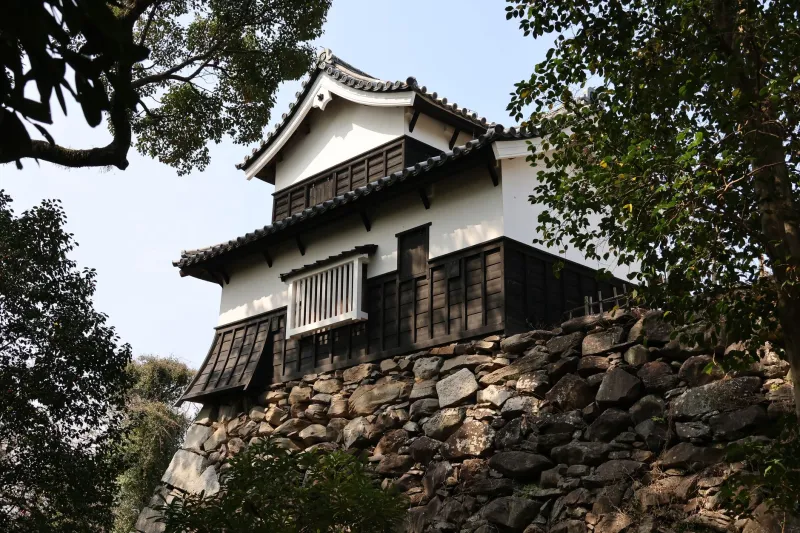
Before or after visiting Hara, spend time at Shimabara Castle, which houses a museum with exhibits dedicated to the rebellion and its aftermath. The castle itself was rebuilt in the 1960s — the original was dismantled after the Meiji Restoration — but the museum inside is genuinely serious scholarship made accessible.
For American visitors, the framing can be striking. The rebellion isn't presented as a simple story of religious martyrdom or noble resistance. The exhibits grapple honestly with the complexity: the mix of economic desperation and genuine faith among the rebels, the political calculations of the shogunate, the role of Dutch traders who actually assisted the government forces (a fact that tends to make Western visitors uncomfortable), and the long shadow the rebellion cast over Japan's self-imposed isolation from the outside world.
This is history that resists easy heroes and clean conclusions. Which is, of course, what makes it worth knowing.
The Hidden Christians and What Came After
One of the most remarkable chapters of this story didn't end at Hara Castle — it continued underground for the next 250 years. After the rebellion, Christianity was banned outright. The kakure kirishitan — hidden Christians — went deep underground, maintaining their faith in secret, disguising prayers as Buddhist chants, hiding crosses inside Buddhist altars, passing down garbled Latin and Portuguese through generations who had no idea what the words meant.
When Japan reopened to the West in the 1860s and Catholic missionaries returned, they discovered these communities still practicing, still believing, after more than two centuries of isolation. Some rejoined the institutional church. Others chose to maintain their hidden traditions, which had by then evolved into something entirely their own.
Small communities of kakure kirishitan descendants still exist in the Nagasaki region today. Several temples and shrines on and near Shimabara Peninsula hold artifacts from this period — objects that look Buddhist on the surface and are Christian underneath.
Why This Story Matters to American Visitors
Americans have a complicated relationship with stories of religious persecution, state power, and cultural survival. We tell versions of them constantly — the Pilgrims, the Civil Rights Movement, the Japanese American internment. The Shimabara story fits that pattern in ways that are uncomfortable and clarifying at the same time.
It's also a story that complicates the version of Japan that most Americans carry in their heads — the monolithic, harmonious, tradition-preserving culture that travel brochures tend to sell. Shimabara says: it was never that simple. People resisted here. People died for things they believed in here. And the place remembers, even when the history books don't mention it.
The sites are not dramatic in a Hollywood sense. There are no reenactments, no gift shops selling plastic swords. What they offer is quieter and more durable: the chance to stand somewhere that actually happened and feel the weight of it.
That's not nothing. That might be everything.