Before the Last Chisel Falls: Finding Shimabara's Disappearing Artisans Before It's Too Late
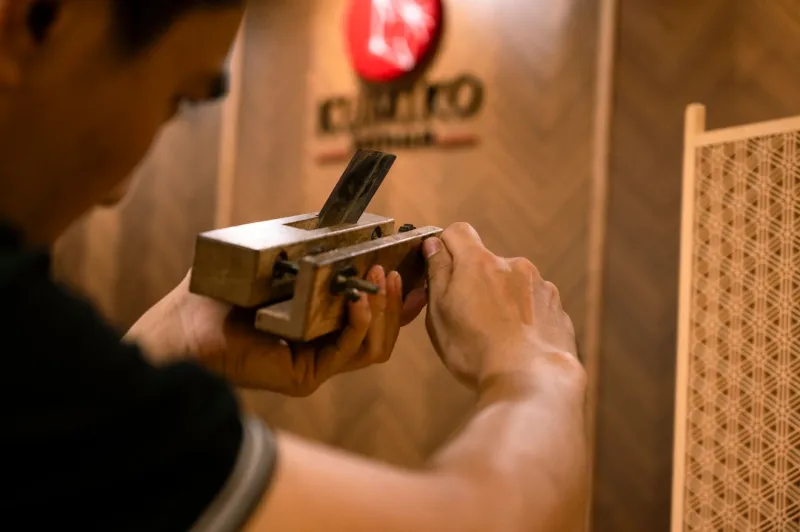
There's a word in Japanese — shokunin — that doesn't translate cleanly into English. "Craftsperson" gets close. "Artisan" gets a little closer. But neither one captures the full weight of it: a person who has devoted their life, with near-religious commitment, to the mastery of a single skill. Not for fame. Not for money. Because the work itself demands it.
Shimabara Peninsula has shokunin. Not many, and fewer every year. But they're here, working in small shops and back rooms and family studios, doing things by hand that machines could approximate but never replicate. The problem — and it's a real one — is that most of them are in their sixties and seventies, their children have moved to Fukuoka or Tokyo, and there is no one lined up to learn what they know.
This is not a story unique to Shimabara. Traditional craft communities across Japan are aging out, and the government programs designed to address it have had mixed results. But Shimabara has a particular version of this crisis, shaped by its geography — isolated enough that outside influences arrived late, connected enough that younger generations had somewhere else to go.
Here's what's still here. And how to find it.
The Woodblock Printer of Minami-Shimabara
Mr. Yamashita (he asked that we not use his first name) has been cutting woodblocks for 52 years. His studio in Minami-Shimabara is a single room attached to his house, smelling of ink and cedar and something older that you can't quite name. The walls hold prints of the peninsula's coastline, the ruins of Hara Castle, Mount Unzen in various moods — images he has made and remade hundreds of times, each one slightly different from the last.
He doesn't advertise. He doesn't sell online. He sells out of his studio, to people who find him, and occasionally at a small market in Shimabara City. His prints run between 3,000 and 15,000 yen depending on size and complexity — roughly $20 to $100 at current exchange rates. For work of this quality, that's almost unreasonably reasonable.
He has no apprentice. When asked about it, he shrugs in a way that suggests the question is both obvious and unanswerable.
"Young people don't want to do this," he said through a translator. "It takes too long to learn. There is no money at the beginning. And they can make more doing something else."
He wasn't bitter about it. Just accurate.
Lacquerware: A Technique That Takes Years to Learn Badly
Urushi lacquerware — the deep, lustrous lacquered woodwork that appears in everything from chopsticks to ceremonial furniture — is one of Japan's most technically demanding traditional crafts. The lacquer itself, drawn from the urushi tree, is toxic until cured. The layering process requires dozens of applications over weeks or months. Getting it wrong, at any stage, means starting over.
On Shimabara, there are currently two active lacquerware workshops operating in traditional methods. One, run by a husband-and-wife team in their sixties, produces small household items — bowls, trays, sake cups — that they sell at their studio and through a single shop in Shimabara City. Their work is not decorative in the gallery sense. It's meant to be used, washed, handled, and loved for decades.
This is actually one of the arguments for buying traditional lacquerware rather than just photographing it: good urushi pieces improve with use. The surface develops character over time. You're not buying an object to display — you're starting a relationship with it.
The workshop accepts visitors by appointment, arranged through the Shimabara tourism office. They don't speak much English, but they're accustomed to curious foreigners, and the work speaks clearly enough on its own.
How to Visit Without Being a Problem
This is worth addressing directly, because the instinct of many American visitors — especially those who've done the Kyoto craft-tourism circuit — is to show up, take photos, post, and move on. That model doesn't work here, and it actively damages the relationships that make access possible in the first place.
A few ground rules for visiting working artisan studios in Shimabara:
Buy something, or don't go. These are not museums. The artisans are not exhibits. If you visit a woodblock studio or a pottery workshop, the minimum respectful transaction is a purchase. Even a small one. You are in someone's workplace, not a gallery.
Ask before photographing. Some makers are fine with it. Some aren't. Ask through your guide or translator, and respect the answer.
Use the tourism office as an intermediary. The Shimabara City tourism office can help arrange visits to studios that don't take walk-ins. This isn't bureaucracy — it's the system that keeps these relationships functional for future visitors.
Give it time. A rushed studio visit is worse than no visit. If you have 20 minutes, spend them somewhere else. If you have two hours, you might actually learn something.
The Pottery Question
Shimabara's pottery tradition is less famous than the great kiln towns of Arita or Karatsu, but it's real and it's worth seeking out. Several potters on the peninsula work in local clay traditions influenced by both the volcanic soil and the long history of Chinese and Korean ceramic techniques that filtered through Nagasaki.
One workshop near the base of Mount Unzen offers occasional half-day throwing sessions for visitors — not the tourist-center version where you make a lopsided bowl and call it cultural exchange, but actual time with a working potter who will show you how the clay behaves and why. It's humbling in the best way. Most people leave with a piece made by the potter, not themselves, and that's probably the right outcome.
Why This Matters Beyond Souvenirs
There's a version of this conversation that's purely economic — buy local crafts, support traditional industries, keep skills alive. That's true and worth saying.
But there's a deeper version too. The shokunin of Shimabara carry knowledge that can't be Googled, can't be AI-generated, can't be approximated by a factory in Guangdong. They carry it in their hands, in the muscle memory of decades, in the specific way they know how their materials behave under their particular conditions. When they stop, that knowledge stops.
You can't save a craft tradition by yourself. One purchase, one visit, one conversation doesn't reverse a demographic trend. But it does something. It says: this matters. It says: someone came from very far away specifically to see this. And sometimes, for an aging shokunin with no apprentice and a lot of quiet mornings, that's worth something too.
Find them while they're still here. The peninsula is small enough that you can.