What Happens When a Place Refuses to Impress You — And You Love It Anyway
Let's be honest about how most Americans plan a trip to Japan.
You open a browser tab. You type something like "best things to do in Japan." You get a list. Fushimi Inari. Shibuya. Arashiyama bamboo grove. Tsukiji (or Toyosu, depending on how current your source is). You screenshot it. You build an itinerary around it. You go, you see, you post, you come home slightly exhausted and somehow still hungry for something you can't name.
Shimabara doesn't appear on that list. It probably never will.
And that, strangely enough, is the whole point.
The Anti-Destination That Keeps Pulling People Back
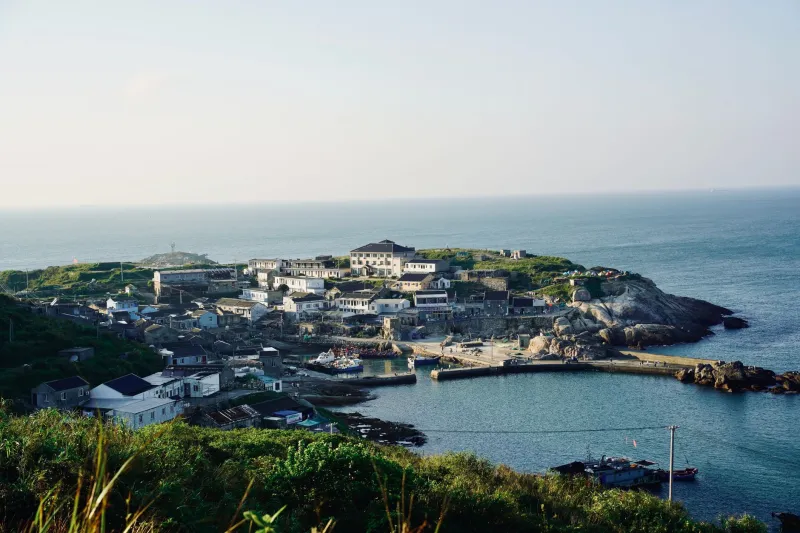
Sitting on a peninsula that juts into the Ariake Sea in Nagasaki Prefecture, Shimabara occupies a peculiar space in Japan's tourism landscape. It has a castle — a good one, actually. It has an active volcano. It has streets where water literally bubbles up from the ground and koi swim through open channels along the sidewalk. It has some of the most underrated onsen in all of Kyushu.
And yet, by every conventional metric used to rank travel destinations, Shimabara barely registers.
There's no Instagrammable queue of tourists in matching outfits waiting to snap the same angle. There's no themed café district. The ferry terminal is functional, not photogenic. The shopping options are modest. The nightlife is, to put it diplomatically, quiet.
For a certain kind of American traveler — the kind who has been told their whole life that a great vacation means maximum stimulation and a packed itinerary — Shimabara can feel, at first, like a mistake.
And then something shifts.
The Expectation Gap Is Real (And It's the Point)
There's a concept in psychology called "expectation disconfirmation" — basically, our satisfaction with any experience is largely determined by the gap between what we expected and what we actually got. Exceed expectations, you're happy. Fall short, you're disappointed.
Most major tourist destinations in Japan are engineered, whether intentionally or not, to meet or exceed a very specific set of American expectations: visual drama, convenient English signage, curated "authentic" experiences, and an ambient sense that you are, in fact, doing Japan correctly.
Shimabara doesn't play that game.
It doesn't try to be your highlight reel. The locals aren't performing their culture for your camera. The pace of daily life here — fishermen heading out before dawn, grandmothers tending gardens, kids biking home from school on roads with no sidewalks — doesn't pause or pivot for visitors. You don't slot into Shimabara's story. You just sort of... stand near it for a while. And if you're patient enough, you start to see the edges of something real.
That disorientation? That mild friction? That's not a design flaw. That's the mechanism.
Why 'Nothing to Do' Is Doing More Than You Think
Here's something worth sitting with: the absence of conventional tourist infrastructure in Shimabara is not an accident of geography or economics. It's a byproduct of a place that simply hasn't been optimized for outsider consumption.
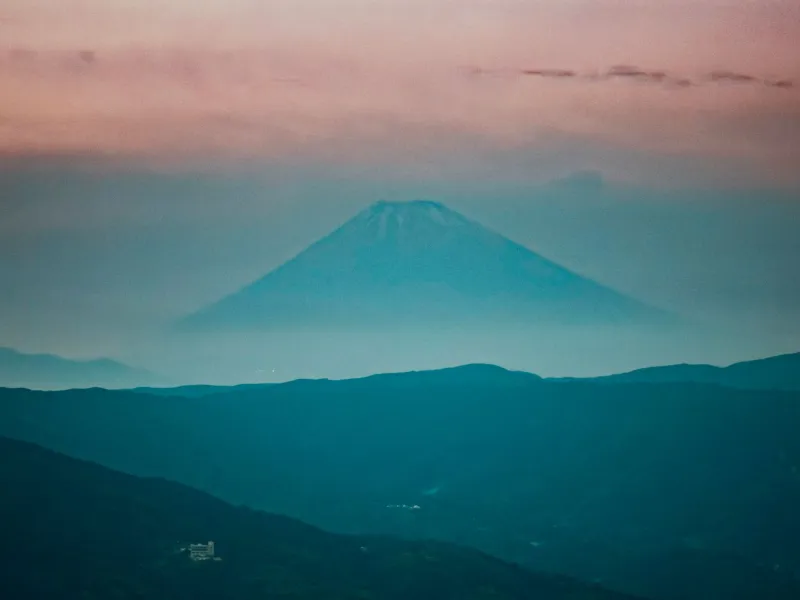
There's no theme-park version of Shimabara. The castle isn't surrounded by souvenir shops selling castle-shaped keychains. The hot spring water that flows freely through parts of the old samurai district isn't roped off behind an admission gate. The volcano — Mount Unzen, which erupted catastrophically as recently as 1991 — is a hiking destination, not a branded attraction.
When American travelers arrive expecting the curated Japan they've seen on travel blogs and YouTube vlogs, Shimabara hands them something different: unmediated access to a place that exists entirely on its own terms.
That can feel uncomfortable. It can feel boring. It can feel like you picked the wrong stop on your itinerary.
And then, usually around day two, something loosens.
You stop looking for the thing you're supposed to be doing. You start noticing the thing that's actually happening. The old man feeding pigeons near the castle moat. The smell of something frying in a kitchen you'll never find on Google Maps. The way the light hits the bay in the late afternoon, when the fishing boats are coming back in and the mountains across the water are going purple.
None of it is Instagrammable in the conventional sense. All of it is unforgettable.
The Psychology of Surrender
Travel psychologists (yes, that's a real field) have noted that the most transformative travel experiences tend to occur not when expectations are met, but when they're completely abandoned. There's a reason people who visit Shimabara often struggle to explain why it affected them so much. The experience resists the language of conventional travel recommendation.
"There wasn't really anything to do" is technically accurate and completely misleading at the same time.
What Shimabara offers isn't a checklist. It's a permission slip. Permission to walk slowly. Permission to eat something you can't identify and trust that it'll probably be great. Permission to sit by the water for an hour without justifying it to yourself as "soaking in the culture."
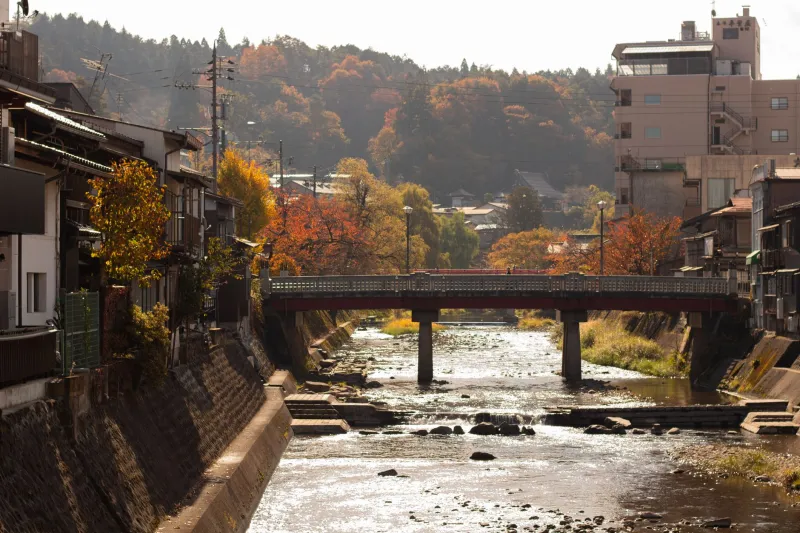
For Americans specifically — a culture that has essentially made productivity a moral virtue — this kind of unstructured, unhurried experience can feel almost transgressive at first. You didn't fly to Japan to sit on a bench and watch a river.
Except, apparently, you did. And it turns out that's exactly what you needed.
What the Peninsula Actually Asks of You
Shimabara isn't passive. It's not a resort where the experience is delivered to you on a schedule. It asks something back.
It asks you to slow your walking pace to match the town's rhythm rather than your itinerary's. It asks you to eat at places with no English menus and point at things and smile. It asks you to hike far enough up Unzen's slopes that the sulfurous vents start smelling like the earth's actual insides. It asks you to take the ferry across the bay and sit on the deck and just look at the water for forty-five minutes without checking your phone.
None of these are dramatic acts. None of them photograph particularly well. But they accumulate into something that most travelers don't find in Japan's headline destinations: a genuine sense of having been somewhere, rather than having seen somewhere.
That distinction sounds small. It isn't.
The Travelers Who Get It
The people who come back from Shimabara most changed tend to share a specific trait: they arrived skeptical and left converted. Not to anything in particular — not to a religion or a philosophy or a lifestyle brand. Just to the idea that a place can be valuable precisely because it makes no effort to sell itself to you.
In a travel landscape saturated with "hidden gems" that turn out to be just as crowded and curated as everywhere else, Shimabara is the genuine article. Not hidden because no one has found it. Hidden because it doesn't wave its arms to get your attention.
You have to come looking. And when you do, you'll find a peninsula that has absolutely no interest in being your Instagram backdrop — and somehow, because of that, becomes one of the most meaningful places you've ever been.
That's the Shimabara paradox. It breaks every rule you brought with you.
And once it does, you'll be very glad you let it.