When Nothing Happens, Everything Changes: How Shimabara Broke My Brain (In the Best Way)
I came to Shimabara looking for content. Not content in the existential sense — I mean actual content. Photos. Stories. That specific kind of travel moment where you're standing somewhere undeniably beautiful and you just know you've got the shot. I'd done it in Kyoto. I'd done it in Tokyo. I figured Kyushu's quieter corner would give me some kind of rustic, volcanic version of the same thing.
It didn't.
And I'm still processing how grateful I am for that.
The Trap We Don't Know We're In
Here's something most American travelers won't admit out loud: we don't actually go places to experience them. We go to document them. There's a difference, and it's a big one.
Documentation requires a story arc. You need a hero (you), a setting (somewhere photogenic), and a payoff (the moment that proves the trip was worth it). Everything gets filtered through the question: will this make sense to someone who wasn't here? Which means you're not really present. You're narrating.
Social psychologists have a term for this — they call it "self-presentation motivation," and research consistently shows it reduces our actual enjoyment of experiences even while increasing the effort we put into them. We work harder at travel and feel less from it. The algorithm has colonized our nervous systems.
Shimabara doesn't care about any of that. And that indifference turned out to be the most disruptive thing I've ever encountered.
What Actually Happened (Which Was Almost Nothing)
My first full day on the peninsula, I walked to a small shrine I'd half-noticed from the road. Nobody was there. A cat was sleeping on the stone steps. I stood around for a while, felt vaguely stupid, and left.
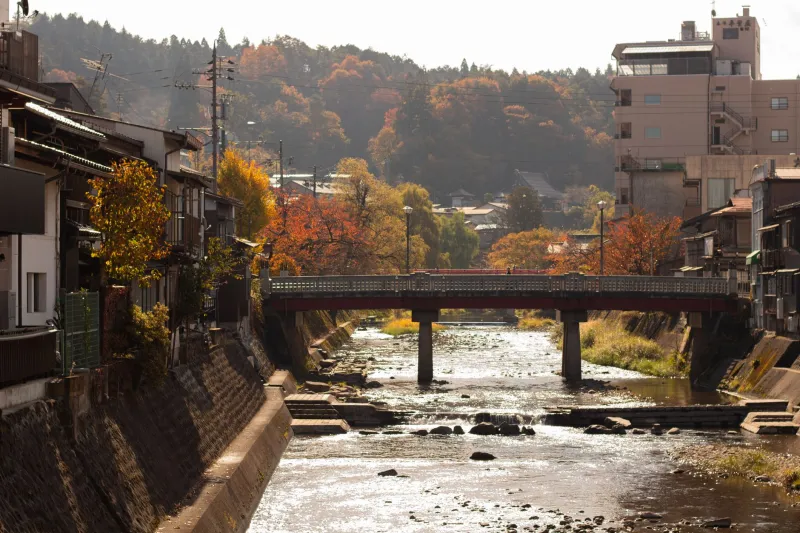
Later I sat near the Shimabara Castle moat and watched a guy fish for about forty-five minutes. He didn't catch anything. I didn't take a single photo.
For dinner, I ate at a tiny place where a woman who seemed to be in her seventies served me tofu that had been made that morning from local soybeans — a regional specialty called shimabara tofu that's been part of the food culture here for centuries. It wasn't plated artfully. It arrived in a bowl. It was the best thing I ate in Japan.
None of this makes a good Instagram caption. All of it stayed with me for months.
The Neuroscience of Ordinary Moments
There's actually a pretty solid scientific explanation for what happened to me, and it has to do with something called the "default mode network" — the part of your brain that activates when you're not focused on any particular task. It's associated with daydreaming, self-reflection, and meaning-making.
Here's the thing: that network gets suppressed when you're in high-stimulation environments. When you're overscheduled, over-stimulated, constantly checking your phone, or trying to optimize a travel itinerary — your brain literally cannot do the deeper processing that generates a sense of meaning and satisfaction.
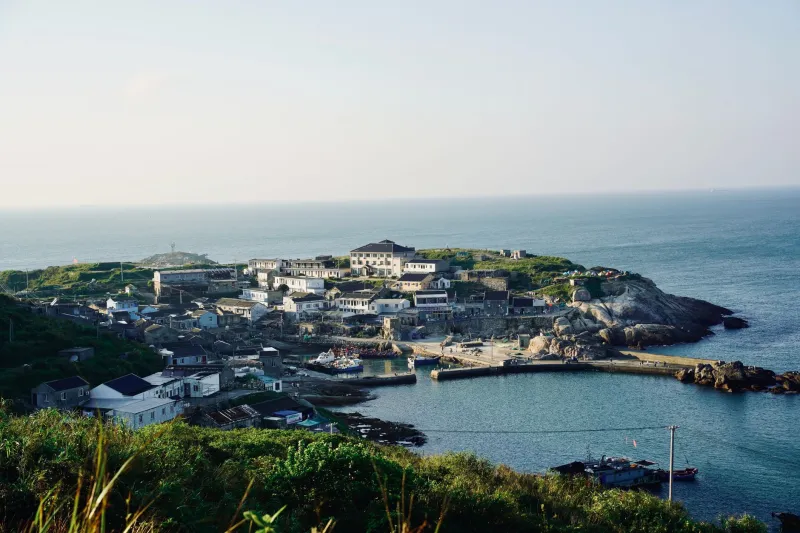
Shimabara, with its slow pace, its quiet streets, its lack of tourist infrastructure screaming for your attention, creates the conditions for that network to come back online. You start noticing things. Small things. The way light hits the water near Chijiwa Bay. The sound of a temple bell that seems to come from nowhere. The strange comfort of a town that has absolutely no idea you're visiting and doesn't particularly need you to.
Philosophers have been pointing at this for centuries. The Stoics called it ataraxia — a kind of tranquility achieved not by acquiring more, but by wanting less. The Japanese concept of ma — the meaningful pause between things — points at something similar. Shimabara is practically built from ma.
The Paradox Explained
Here's what I've come to think the Shimabara paradox actually is: we assume joy requires intensity. We've been trained to equate happiness with peak experiences — the best meal, the most dramatic view, the story that gets the most likes. And so we spend our lives (and our travel budgets) chasing peaks.
But peaks require valleys. And if you're always chasing the next high, you never actually inhabit the ground you're standing on.
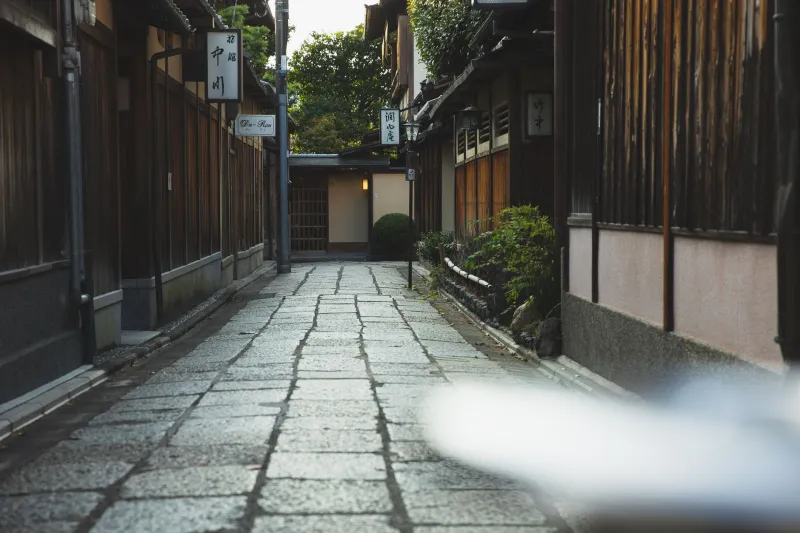
Shimabara is almost entirely ground. It's the everyday texture of a place that has centuries of history — the Shimabara Rebellion, the volcanic eruptions, the resilience of a community that rebuilt itself repeatedly — but wears none of it like a costume. The history is just there, woven into the walls of the old samurai district, into the water that bubbles up through the streets from underground springs, into the faces of people who have lived here their whole lives and seem, in a way that's hard to describe, genuinely fine.
That "genuinely fine" quality was initially baffling to me. Then it became something I wanted desperately to understand. Then, slowly, it started to feel like something I could access myself.
What Changes When You Stop Performing
Around day three, something shifted. I stopped taking notes. I stopped framing shots I wasn't going to take. I ate breakfast slowly and looked out a window and didn't think about much. I walked around without a destination and ended up near some old ruins and sat down on a wall and felt — and I know how this sounds — completely okay.
Not euphoric. Not transformed. Just okay in a way that felt enormous, because I couldn't remember the last time I'd felt it without chemicals or alcohol or the particular buzz of something going right on a to-do list.
This is what Shimabara does. It doesn't give you the peak. It gives you the ground. And if you stay long enough, you start to realize the ground is what you were missing.
Coming Home Different
I've been back in the States for a while now, and I still think about that tofu. I think about the fishing guy who caught nothing and seemed perfectly happy about it. I think about the cat on the shrine steps, completely unbothered by my presence or my absence.
Shimabara didn't give me content. It gave me something harder to explain and much more useful: a recalibration. A reminder that the capacity for joy doesn't live in the next experience. It lives in the quality of attention you bring to this one.
You can find that lesson in a therapist's office or a philosophy book or a meditation retreat. Or you can fly into Nagasaki, take the ferry across the Ariake Sea, and let a peninsula that doesn't care about your metrics quietly do the work for you.
It's a weird way to travel. It might be the best way I've ever done it.